
Strainers
Product description
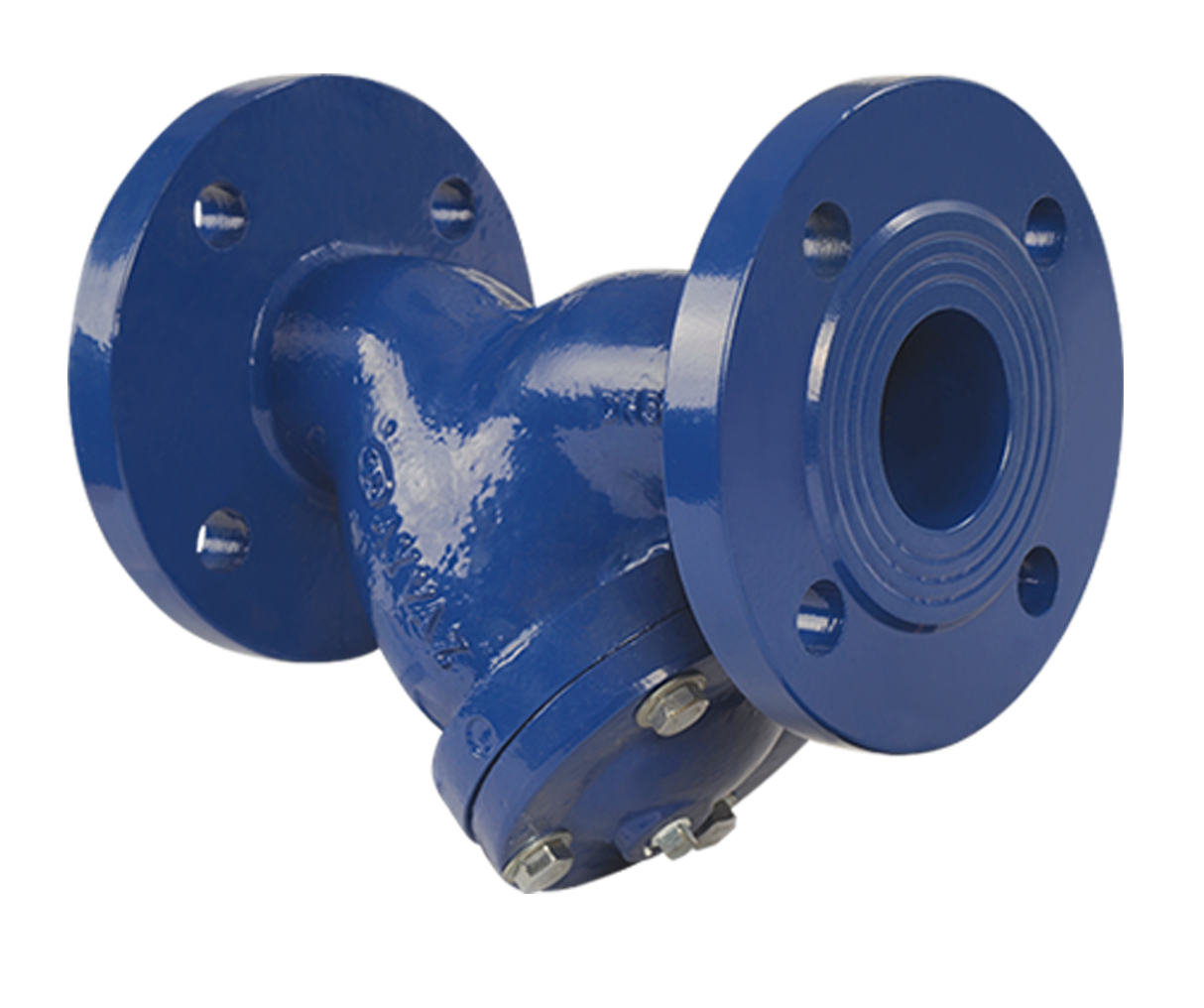
Strainers (filters) are valve components designed for the mechanical separation of solid particles from pipeline systems. Their main function is to protect equipment such as pumps, control valves, flow meters, heat exchangers and other sensitive system components from impurities such as sand, metal shavings, corrosion products and welding residue.
They are installed in pipeline systems for heating, cooling and fluid transport, where they enable reliable, long-term plant operation while reducing the risk of downtime and equipment damage. The stainless steel filter element allows simple maintenance and cleaning without the need to disassemble the entire unit.
The most common designs are Y-type strainers with flanged, threaded or welded connections, available in various materials and pressure classes according to system requirements.

Applications
District heating and cooling systems
Pumping stations
Thermal power plants
Gas plants

Refinery plants
Chemical and petrochemical industry
Basic technical specifications
DN15 – DN800
PN16 (150) – PN160 (900) — for higher pressures, please send an inquiry
up to 600°C
Y-type, T-type, basket type
EN-GJS-400-15, P235GH (1.0345), GP240GH (1.0619), stainless steel and equivalent materials
stainless steel AISI 304, AISI 316 and equivalent materials
according to mesh screen size and process requirements
flanged (EN 1092-1, EN 1092-2), threaded (BSP/NPT), welded ends (butt weld), wafer design
EN 12266-1
EN 12516, ASME B16.34
Construction designs
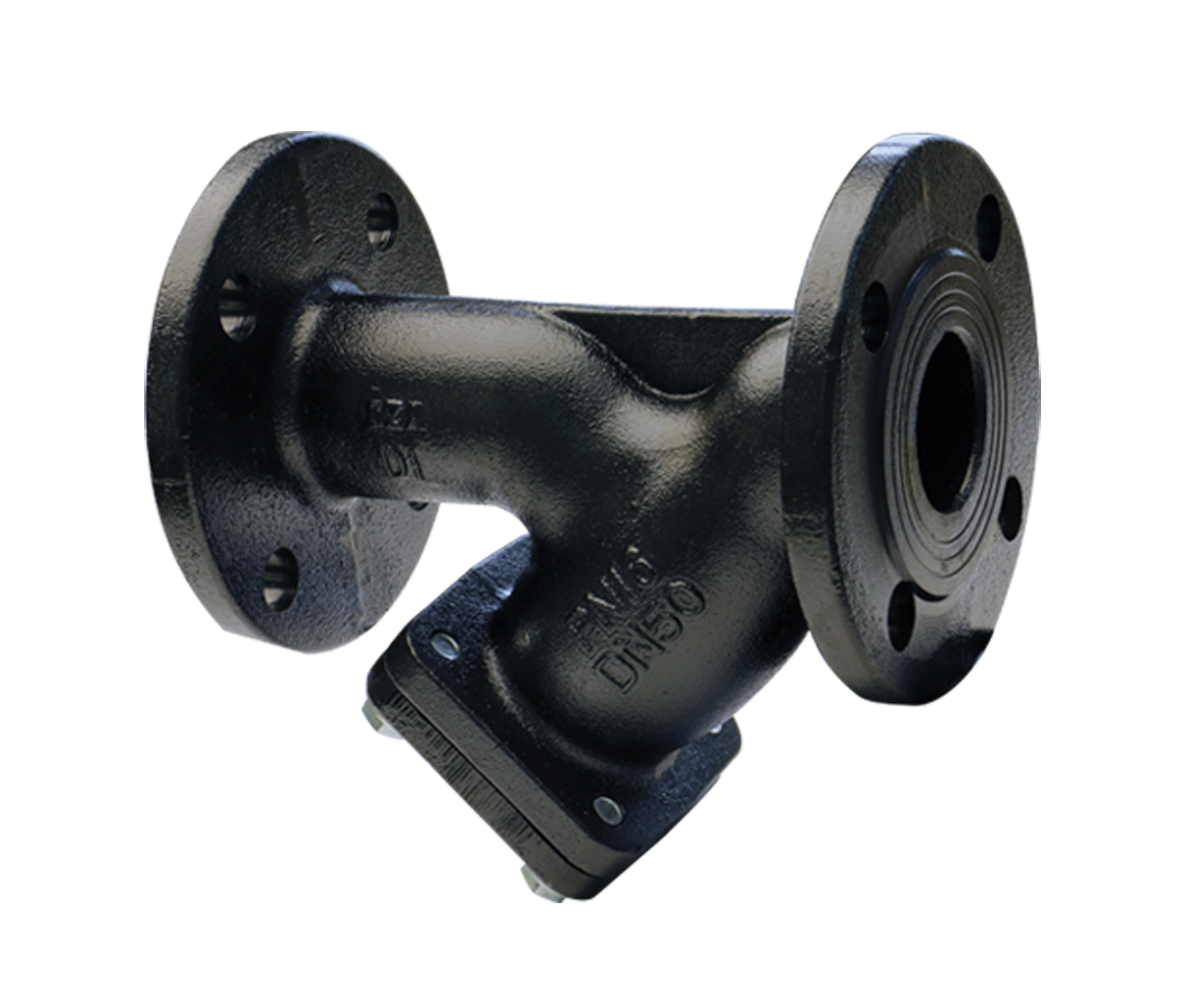
Y-strainer
The Y-strainer is the most commonly used strainer design, in which the filtering element is positioned at an angle to the pipeline direction, allowing efficient removal of solid particles with relatively low pressure drop. The design allows easy cleaning and maintenance without disassembling the entire unit, making it suitable for heating, steam, water, gas and industrial fluid systems.

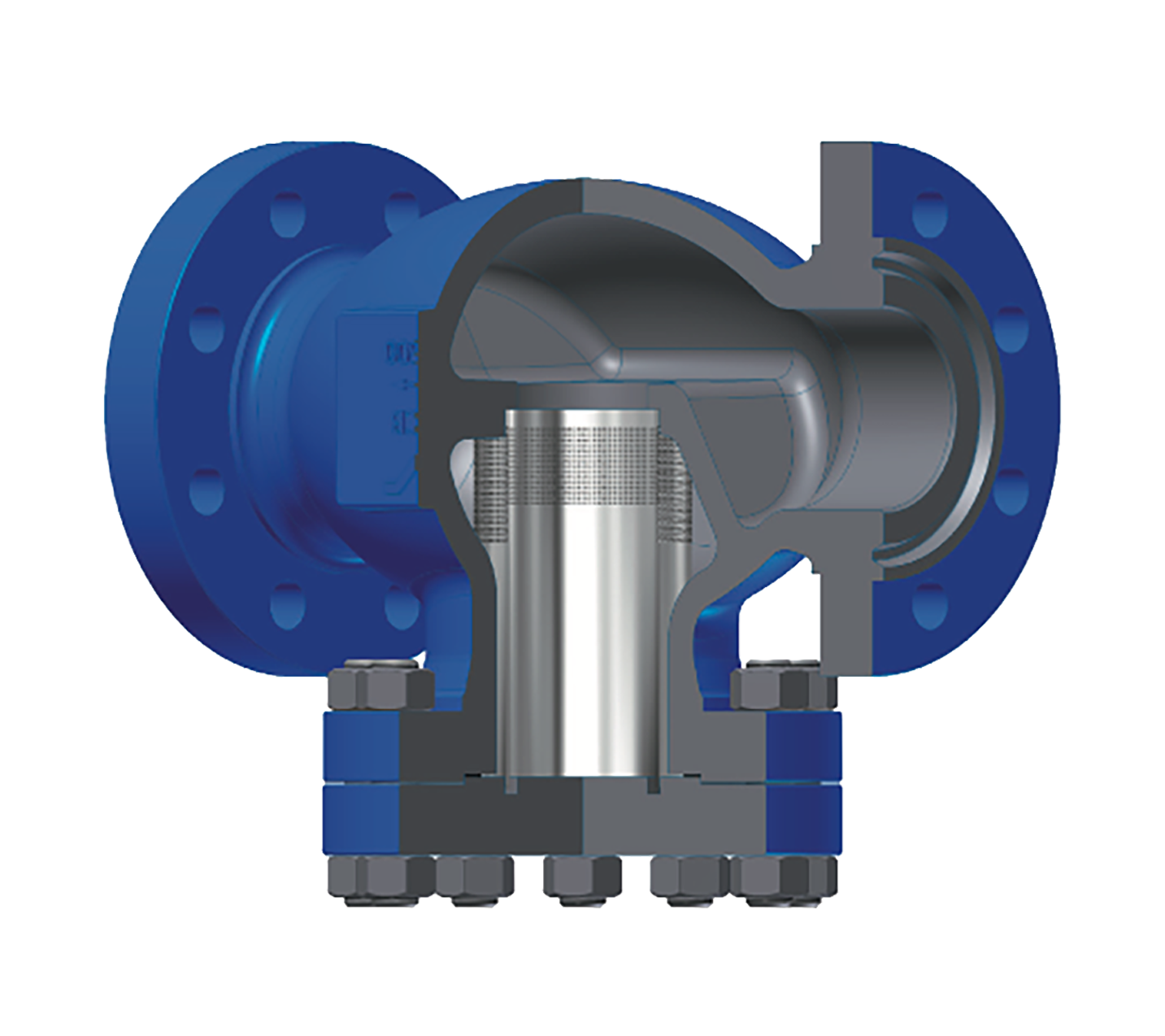
T-strainer (basket type)
The T-strainer, also known as a basket-type strainer, is a design in which the filter element is housed in an enlarged chamber within the strainer body, positioned in line with the pipeline, allowing straight-through flow with low pressure drop and high solids-holding capacity. The strainer works by passing the fluid through a perforated or mesh filter element, which retains impurities in the filter basket while the filtered fluid continues through the system. This design allows easy removal, cleaning and maintenance of the filter element, as well as reliable operation in larger-diameter pipelines and high-flow systems, making it suitable for district heating, energy, process and industrial plants.

Standards and certification
The valves are manufactured in accordance with relevant European standards for energy and industrial equipment.
Manufacturing and quality control includes the following certificates and standards:
- EN 12516
- EN 12266-1
- PED 2014/68/EU
- ASME B16.34
- ISO 9001/14001
Strainer manufacturers delivered on previous projects

Project support
The choice of an appropriate strainer depends on the nominal diameter, working pressure, media temperature, degree of system contamination and accessibility for regular maintenance. In older networks and at initial commissioning, it is recommended to temporarily install a strainer with a finer mesh, which is later replaced with the standard one.
The expert team at Contex Energy provides technical support to designers, contractors and energy companies in selecting the optimal design for specific systems.

Contact us for more information

Schedule a free consultation here
Related services
Contex Energy also provides the following services:


Frequently asked questions
Strainers are used to mechanically remove solid particles from circulating water, such as sand, rust, corrosion products and welding residue. This protects control valves, pumps, measuring instruments and heat exchangers from clogging, wear and premature failure. They are especially important during initial system commissioning and in older networks.
The Y-type strainer has a compact body with an angled screen and is most commonly used in substations and industrial plants. The basket-type strainer has a larger collection basket, making it more suitable for systems with a higher degree of contamination. Its larger capacity allows longer intervals between cleanings.
A duplex strainer has two parallel strainers and a switchover valve. It allows one strainer to be cleaned while the system continues operating through the other. It is used in systems that cannot be shut down, such as critical pumping stations and industrial plants in continuous operation.
A strainer is installed upstream of the equipment it is meant to protect. It is most commonly installed before control valves, pumps, measuring instruments and heat exchangers. This prevents solid impurities from reaching sensitive parts of the system.
Cleaning frequency depends on the degree of system contamination, the quality of the medium and the installation's operating phase. Cleaning may be more frequent at initial commissioning or after reconstruction, when there is more welding residue, rust and other particles in the system. During stable operation, the cleaning interval is determined by system conditions and regular maintenance results.
Stainless steel screens, such as AISI 304 and AISI 316, are most commonly used for district heating systems. These materials are corrosion-resistant and suitable for hot and superheated water. Material selection depends on temperature, medium quality and project technical requirements.
Yes, certain strainer designs can be installed in a vertical pipeline. It's important that the screen or basket always be in the lower position, so impurities settle properly and cleaning is easier. The final installation method depends on the strainer type and pipeline conditions.
For district heating systems, screens with openings of 0.5 mm to 1.0 mm are most commonly used. During initial commissioning or in older networks, a finer screen may be used temporarily for better impurity removal. Once the system stabilizes, the screen can be adjusted to standard operating conditions.