
Gate valves
Product description
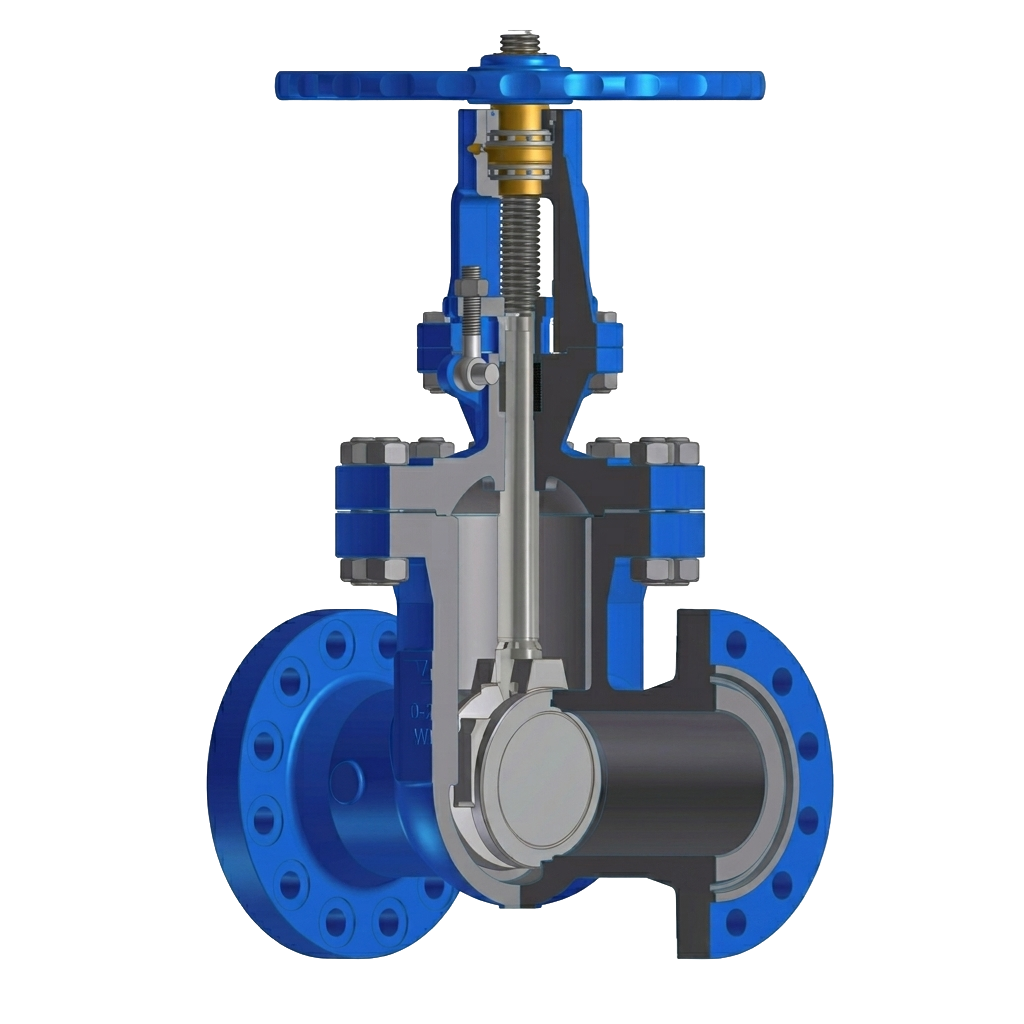
Gate valves are straight-through shut-off valves used exclusively for fully opening or fully closing (ON-OFF) fluid flow in a pipeline. Unlike ball and butterfly valves, gate valves are not intended for flow control and operate only at end positions (fully open / fully closed). Thanks to minimal hydraulic resistance in the open position and reliable tightness, they are a standard solution for isolating main hot-water and steam pipelines in energy systems.

Applications

District heating and cooling systems

Industrial plants with steam and superheated water

Water supply and water treatment

Gas plants
Basic technical specifications
DN50 (2") – DN900 (36") (larger sizes available on request)
Class 150 – Class 2500
up to 600°C (depending on material and design)
ASTM A216 WCB, A217 WC6, A351 CF8, 1.0619 and equivalent materials
A217 WC6, 1.0619+STL, 13Cr, ASTM A216 WCB and equivalent materials
13Cr (martensitic stainless steel), SS 420, A182 F304 and equivalent materials
flanged or welded ends, made in accordance with EN, DIN and GOST standards
handwheel, manual gearbox, pneumatic, electric or hydraulic actuator
EN 1984, API 600, etc.
Gate valve construction designs
By wedge/gate shape
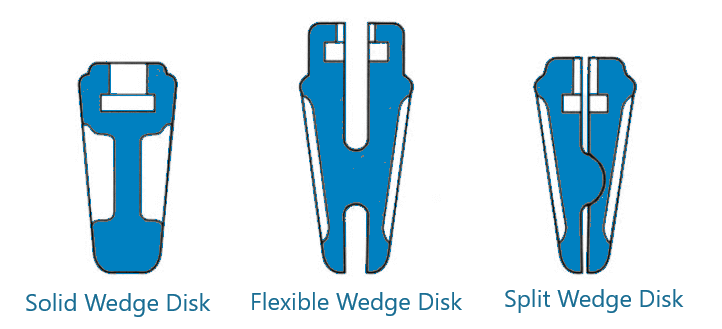
- Solid wedge: a one-piece wedge with a simple and robust construction, most suitable for general use. Limited for extreme temperature cycling, as it has no flexibility under thermal expansion.
- Flexible wedge: a one-piece wedge with a groove or slot around its rim giving it elasticity. Compensates for thermal expansion and seat deformation; recommended for steam pipelines and systems with variable temperatures.
- Split wedge / parallel disk: consists of two parts with a spring between them. These segments are connected so they can shift slightly and adapt to the seat's position, achieving even seating along the entire sealing surface.

By stem design
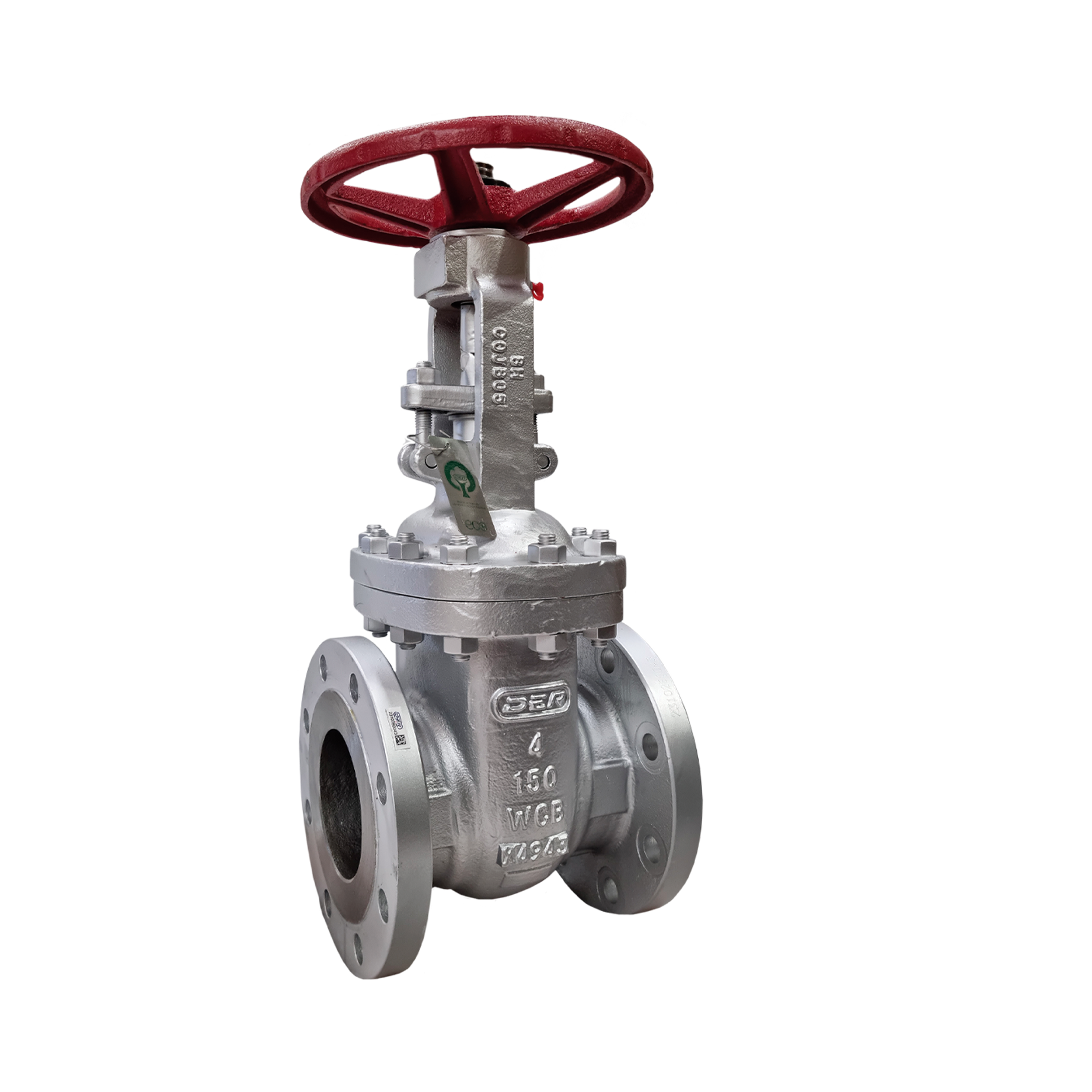
- Rising stem (OS&Y): a gate valve construction where the stem thread is located outside the fluid zone, and the stem's axial movement during rotation provides a direct visual indication of the gate's position (open/closed), with reduced thread wear and easier maintenance. Recommended for above-ground installation.
- Non-rising stem (NRS): a gate valve construction where the stem stays in the same axial position while the shut-off element moves along the thread inside the valve body, allowing compact installation but with the thread constantly exposed to the working medium and no direct visual indication of the gate's position. This design has more compact dimensions and is suitable for underground installation or limited space.
Body sealing (bonnet)
Bolted Bonnet (BB)
The most common body construction for gate valves, in which the body and bonnet are joined with bolted connections and a gasket between the mating surfaces, providing reliable sealing, simple assembly/disassembly, and wide use in medium pressure and temperature ranges.
Pressure Seal Bonnet (PSB)
A construction in which the tightness of the body-bonnet joint is achieved by the internal fluid pressure, which further compresses the sealing element, providing exceptional sealing reliability under high-pressure and high-temperature conditions, typically in energy plants.
Standards and certification
The valves are manufactured in accordance with relevant European standards for energy and industrial equipment.
Manufacturing and quality control includes the following certificates and standards:
- ISO 9001
- ISO 14001
- PED (2014/68/EU) – module H
- EN 1984 / DIN 3352
- EN 12266-1
- API 600
- ASME B16.34
- API 598 (testing)
- ATEX 2014/34/EU (explosive atmospheres)
- Fire Safe (API 6FA / 607 / ISO 10497)
Valves delivered by manufacturer on previous projects


Project support
The choice of an appropriate gate valve depends on the system's operating parameters: pressure, media temperature, nominal diameter, frequency of operation and installation conditions (above-ground/underground).
The expert team at Contex Energy provides technical support to designers, contractors and energy companies in selecting the optimal gate valve design for specific energy systems.

Contact us for more information

Schedule a free consultation here
Related services
Contex Energy also provides the following services:


Frequently asked questions
Gate valves are used to fully open or fully close fluid flow in a pipeline. Unlike ball valves, gate valves have a flat shut-off element that rises or lowers inside the valve body. They are most often used where minimal hydraulic resistance is required in the fully open position.
No, gate valves are not intended for flow control. They are used exclusively as ON-OFF valves, meaning they operate in the fully open or fully closed position. Operation at intermediate positions can cause vibration, wear of the sealing surfaces and reduced valve service life.
With a rising stem, the stem moves up or down, so the gate's position can be seen visually. This design is suitable for above-ground installation and easier maintenance. With a non-rising stem, the stem stays in the same position, making it more suitable for underground installation or spaces with limited height.
A solid wedge has a simple, robust one-piece construction, making it suitable for general use. A flexible wedge has a groove or slot that gives it elasticity and better adaptation to temperature changes. For this reason, a flexible wedge is more often recommended for steam pipelines and systems with variable temperatures.
Gate valves can be supplied in various nominal diameters and pressure classes, according to project requirements. The page lists diameters from DN50 to DN900, with larger dimensions available on request, as well as pressure classes from Class 150 to Class 2500. The exact specifications are defined according to the medium, temperature, pressure and the system's technical documentation.
Yes, gate valves can be fitted with pneumatic, electric or hydraulic actuators. Automation is used when remote control, greater operational safety or integration of the valve into the plant's control system is required. In addition, gate valves can also be operated manually, using a handwheel or manual gearbox.