
Butterfly valves
Product description
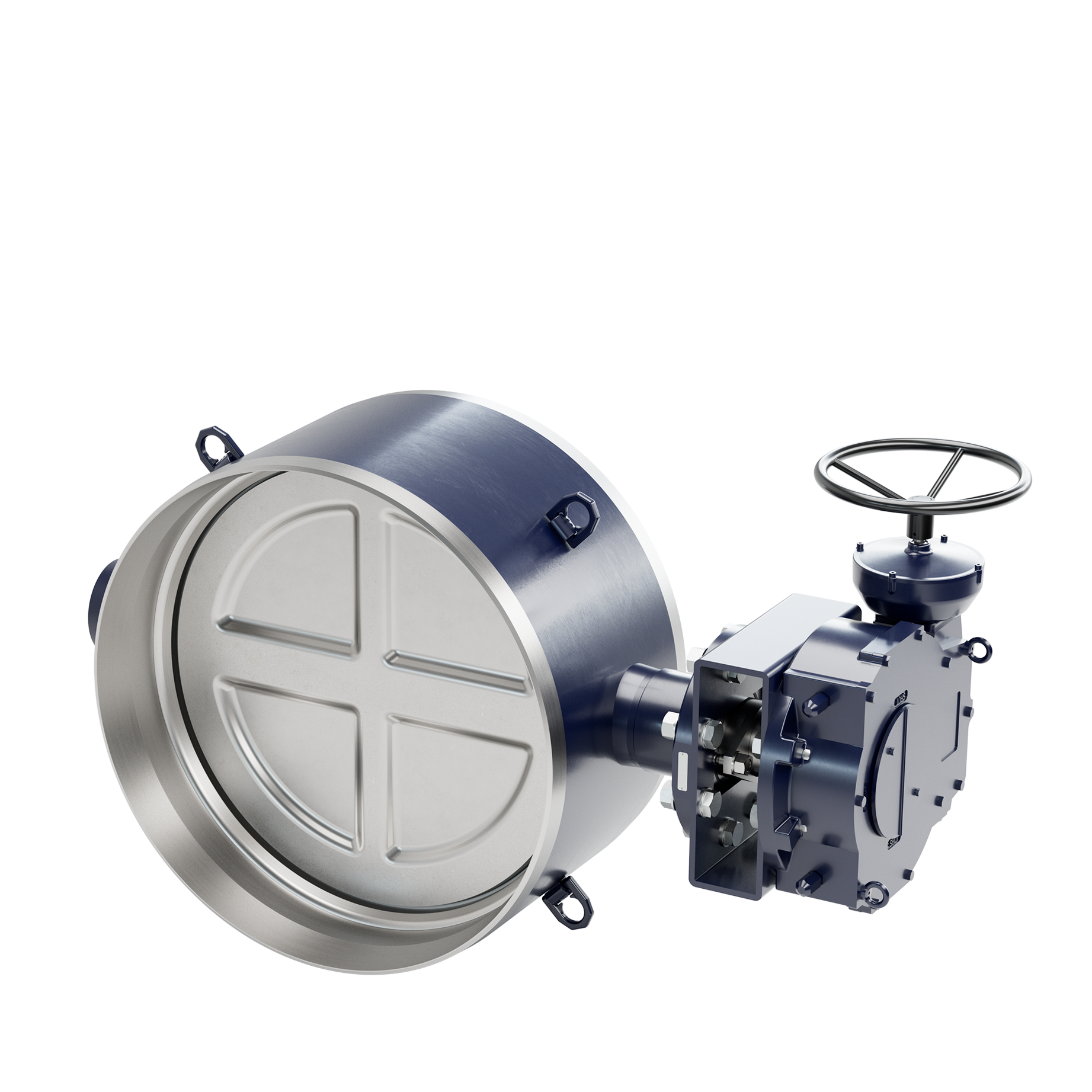
Butterfly valves are a reliable and economical solution for shut-off and control functions in the transport of hot and superheated water, cooling water and steam. Thanks to their short installation length, low weight and simple automation, they are particularly suitable for large-diameter pipelines (DN50 – DN1200 and above).

Applications
District heating and cooling systems
HVAC systems
Pumping stations

Industrial steam plants

Refinery plants

Gas plants
Basic technical specifications
DN32 - DN2400
PN16, PN25, PN40, PN65 and PN100
-196°C to 600°C
1.0619+N, ASTM A 216 WCB, P235GH (1.0345), P355NL1 (1.0566), P355QH1 (1.0571), etc.
ASTM A105, ASTM A 351 CF8M, 1.0619+N, ASTM A 216 WCB, GX5CrNiMo19-11-2 (1.4408), etc.
ASTM A564 Gr.630, ASTM A 276 Gr 431 (1.4057+QT800), X3CrNiMoN27-5-2 (1.4460), etc.
Full bidirectional tightness per EN 12266-1, leakage class A and B
hand lever, manual gearbox, pneumatic, electric or hydraulic actuator
wafer (between flanges), lug (with integrated threaded ears), flanged and welded ends
soft seat, metal seat
concentric, double-eccentric and triple-eccentric butterfly valves
EN488, EN593, API 609, etc.
Shut-off (ON-OFF) and control applications in energy systems
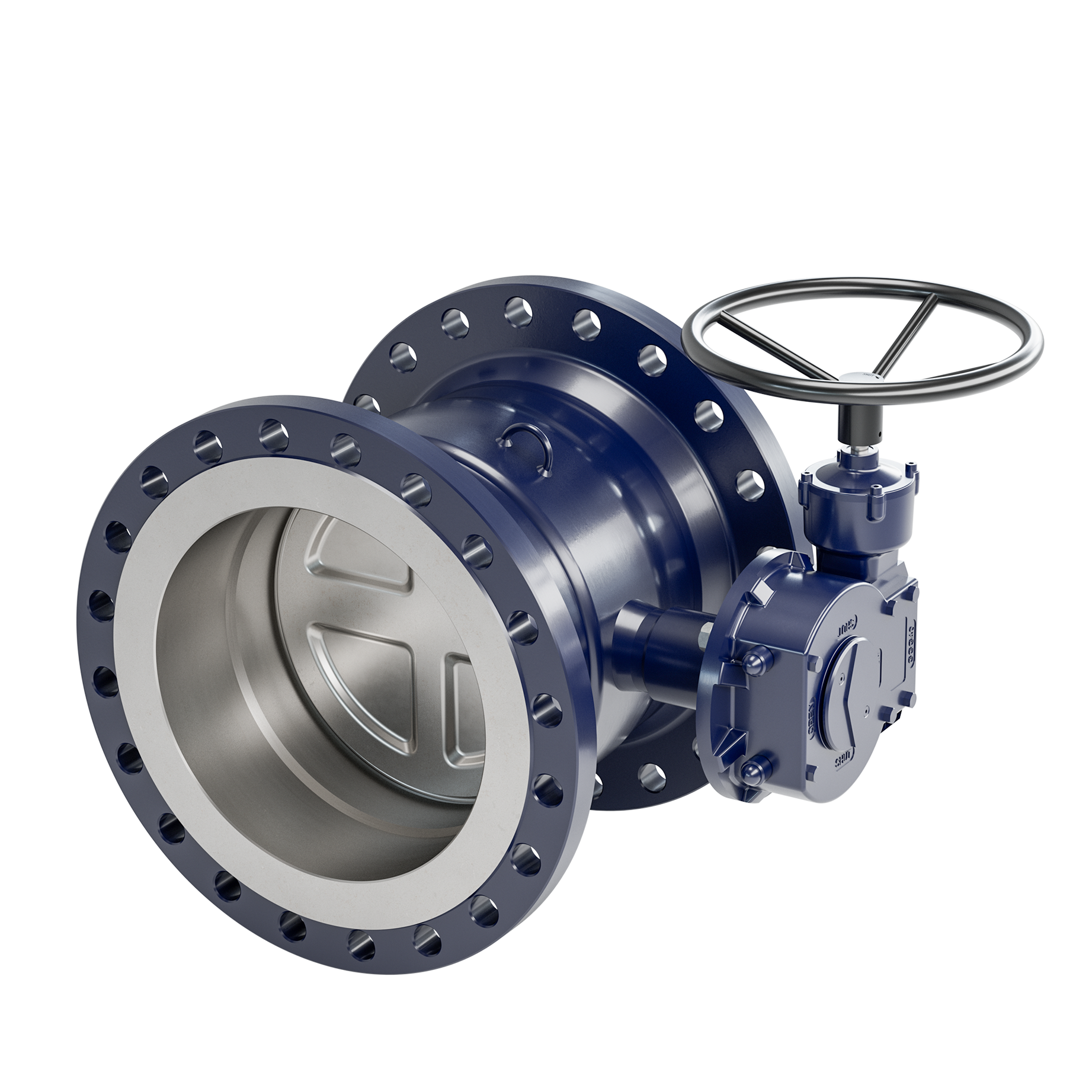

Shut-off function (ON-OFF)
To fully open or fully close fluid flow in the pipeline, the disc is rotated 90°, placing it either parallel to the flow direction (fully open) or perpendicular to the flow (fully closed). In the closed position, sealing is achieved through contact between the disc and the seat, using a soft/elastic or metal seat depending on operating conditions (hot/superheated water or steam).
The ON-OFF design is used wherever a section of the system needs to be isolated quickly, reliably and safely, without the need for fine flow control.
Applications of the shut-off function:
- Isolation of main hot-water and steam pipelines
- Separation of pumps, heat exchangers and boilers
- Service shut-off of substations
- Emergency shut-off in critical situations
- Network sectioning for maintenance
- Bypass lines in energy plants
Angle (Control) design
Allows controlled flow adjustment by changing the disc opening angle between 0° and 90°. Unlike the shut-off function, the valve does not operate only at end positions but also at intermediate positions, changing the effective flow cross-section and thus the amount of fluid passing through the pipeline.
Control is most often performed using electric or pneumatic actuators with proportional control (e.g., 4–20 mA or 0–10 V signal), enabling precise control of temperature, pressure or flow in district heating, cooling and steam systems.
At higher temperatures and pressures (superheated water and steam), double- or triple-eccentric designs are recommended, as they provide more stable control and a longer seat service life.
Applications of the control function:
- Temperature control in substations
- Flow control through heat exchangers
- Maintaining differential pressure in the network
- Flow modulation in district cooling systems
- Steam control to consumers
- Energy optimization and system balancing
Sealing types in butterfly valves
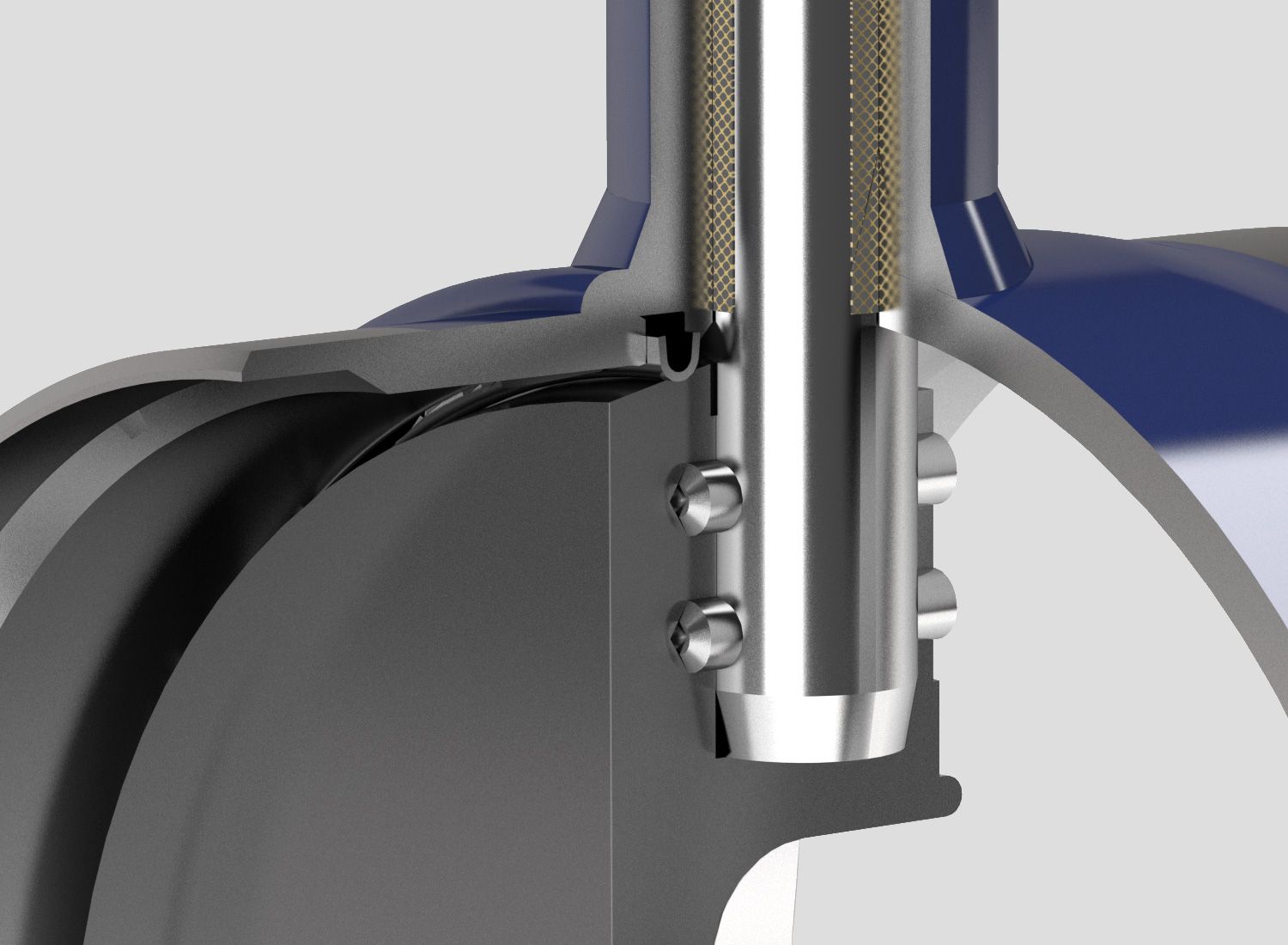
Metal sealing (integral body seat)
The metal seat is machined directly into the valve body (integral body seat), or a metal ring is secured within the valve body.
Sealing is achieved through metal-to-metal contact, most often controlled by conical geometry or an angled sealing surface. With a laminated ring, graphite provides micro-elasticity and tolerance compensation.
The most common metal seat materials in butterfly valves are:
- Stainless steels: AISI 316/316L (1.4401/1.4404), 1.4462, 304/304L, 1.4542 + HCr plating, etc.
- Hardfacing: Stellite (Co-Cr) alloy, Ni-based alloys (Inconel 625)
- Laminated metal/graphite rings: stainless steel combined with layers of graphite
Key advantages of metal sealing:
- High temperatures (400–600°C and above, depending on material)
- High differential pressures
- Fire-safe design
- Minimal friction and wear with precise eccentric geometry
Soft sealing (soft-seated)
The valve seat is pressed or inserted into the body, and can also be made as a replaceable ring. The valve disc is steel.
The disc, with an outer diameter larger than the inner diameter of the seat, is elastically pressed into the soft seat, achieving tightness. Complete tightness (zero leakage) is achieved at low and medium pressures.
The most common soft seat materials in butterfly valves are:
- Elastomers: EPDM, NBR, FKM-Viton, NR, etc.
- Fluoropolymers: PTFE (Teflon), RPTFE, PFA, etc.
- Special materials: HNBR, silicone, etc.
The main drawbacks of soft sealing can include temperature limitations, sensitivity to wear, and abrasive media.
Butterfly valve designs by disc construction
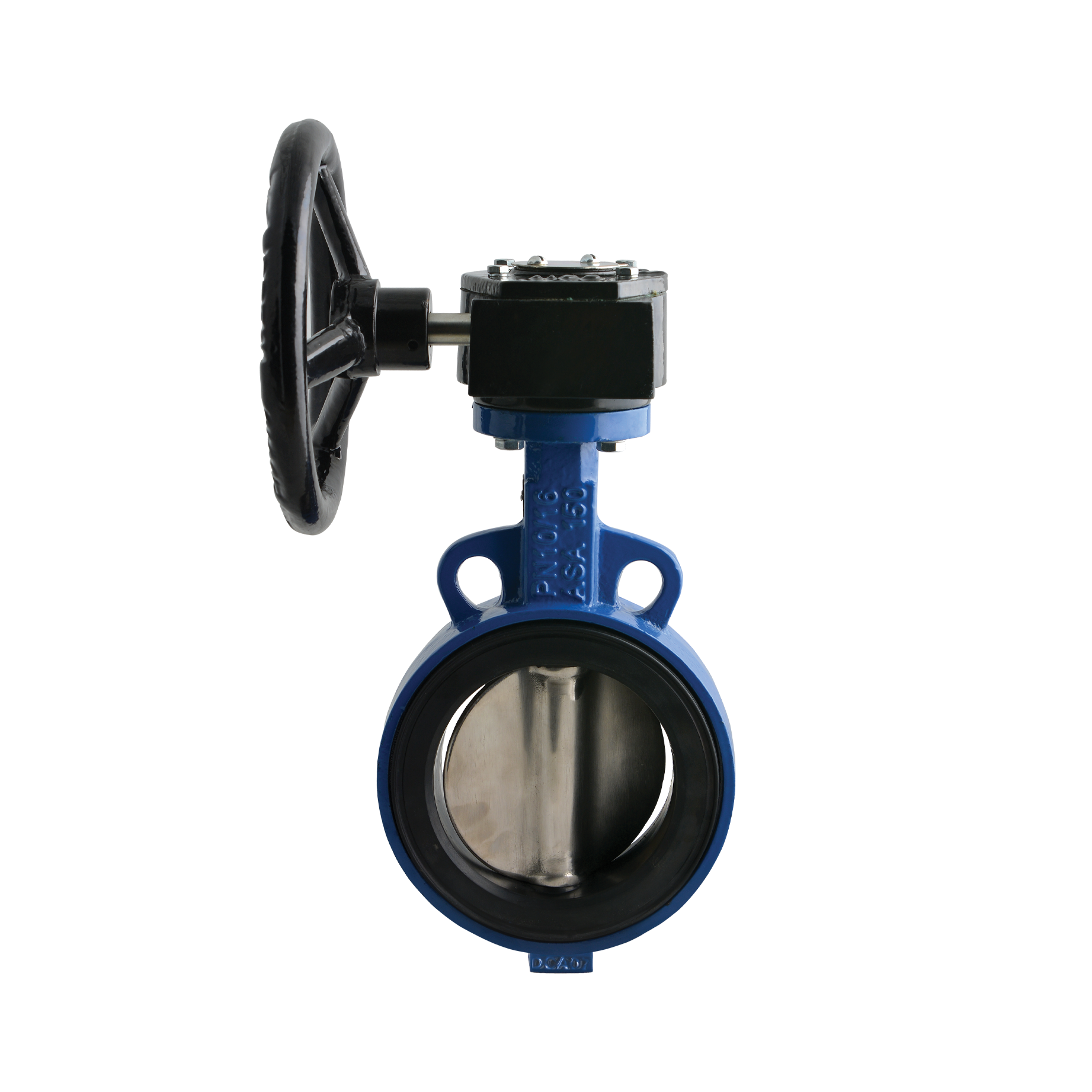
Concentric (zero-offset) butterfly valves
Concentric (zero-offset) butterfly valves have a shaft axis passing through the center of the disc and the pipeline axis, so the disc is fully concentric with the seat. During operation, the disc is in contact with the seat for almost the entire stroke (except in the fully open position), with no geometric separation.
When closing, the disc — due to its larger diameter — is radially pressed into the seat, which deforms elastically to provide reliable sealing (class A) while compensating for wear. Because of the constant friction between the disc and seat, this design most often uses a soft seat.
Key advantages of concentric (zero-offset) construction:
- Simple construction
- Lower cost
- Low weight
- Easy maintenance
- Full tightness at low pressures


Double-eccentric (double offset) butterfly valves
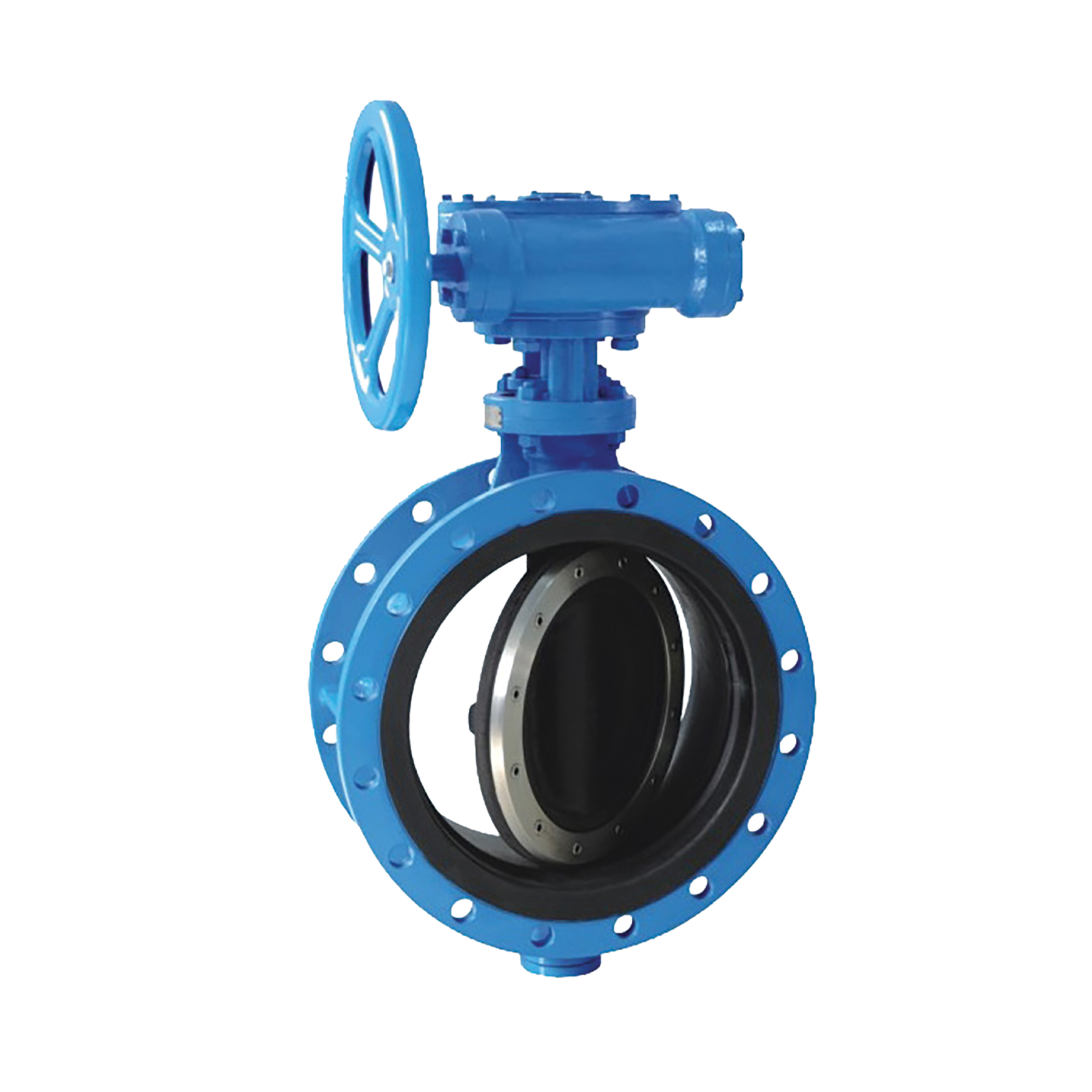
Double-eccentric (double-offset) butterfly valves have two geometric offsets: the shaft axis is offset from the center of the disc and from the pipeline axis. As a result, the disc separates axially from the seat during initial opening, with contact occurring only in the final stage of closing. This significantly reduces friction, torque and wear compared to concentric valves, extending seat life.
This construction allows the use of either soft or metal sealing, making it suitable for higher pressures and temperatures. However, some sliding contact still occurs, so wear is greater than in triple-eccentric valves, which offer a better solution for the most demanding operating conditions.
Advantages of double-eccentric (double-offset) construction:
- Less friction than concentric valves
- Lower torque
- Longer seat service life
- Option for metal sealing
- Suitable for higher pressures and temperatures
Triple-eccentric (triple offset) butterfly valves
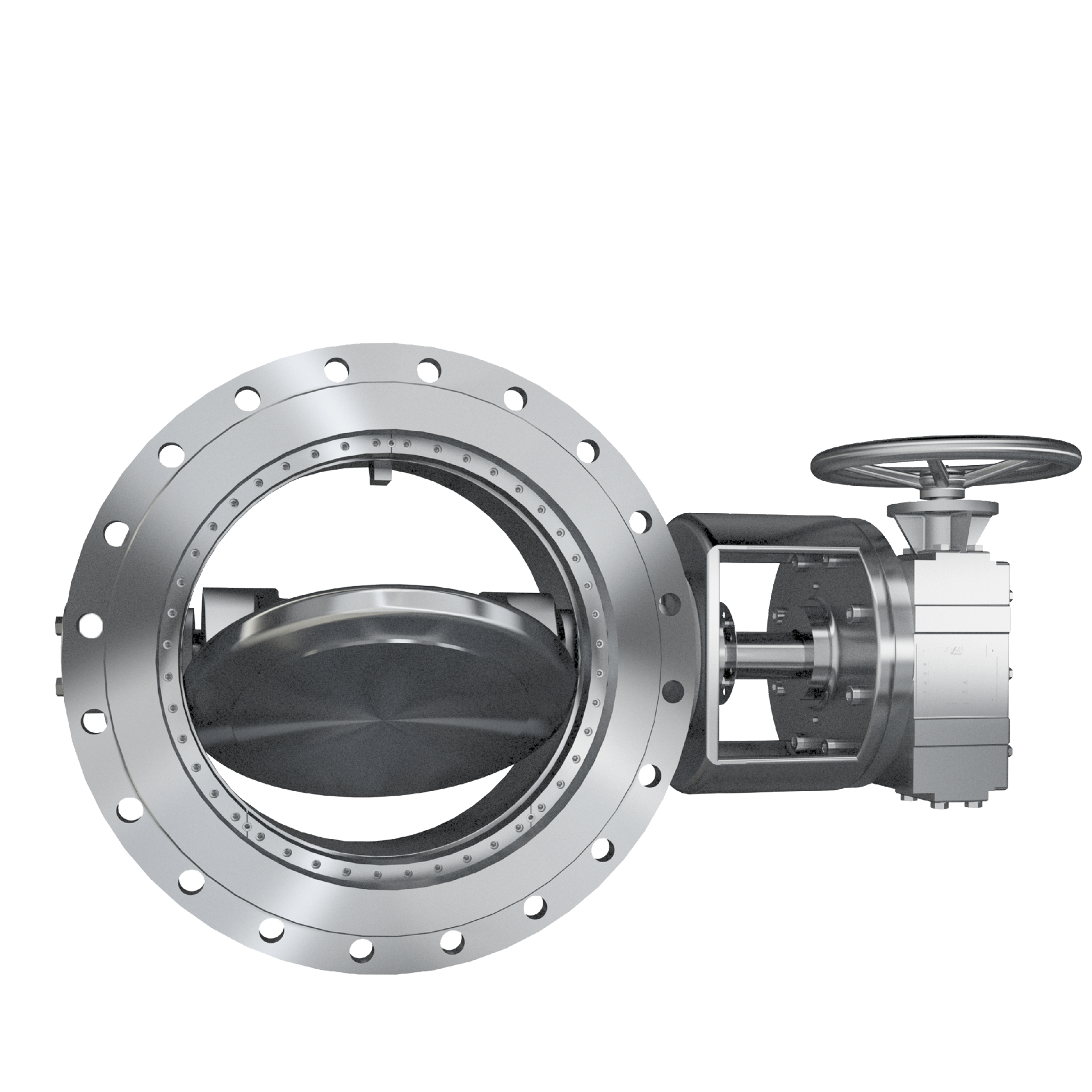
Triple-eccentric (triple-offset) butterfly valves have three offsets: the shaft axis is offset from the center of the disc and the pipeline axis, while the sealing surfaces of the disc and seat are conical (the third offset). This geometry allows the disc to fully separate from the seat during opening and closing, with no sliding contact.
Sealing is achieved only in the final stage of closing, through precise "wedge-like" seating of the conical surfaces, eliminating friction and wear during operation. These valves are typically fitted with metal or metal/graphite sealing and are intended for demanding industrial conditions, particularly high pressures and temperatures.
Advantages of triple-eccentric butterfly valves:
- No sliding contact between disc and seat during the stroke (minimal friction)
- Significantly reduced wear and longer service life
- Metal or metal/graphite sealing (high resistance)
- Reliable sealing even at high temperatures and pressures
- Fire-safe construction (suitable for critical industrial conditions)
- Stable performance in demanding media (steam, gases, aggressive fluids)
- Lower torque compared to valves with continuous contact
Standards and certification
The valves are manufactured in accordance with relevant European standards for energy and industrial equipment.
Manufacturing and quality control includes the following certificates and standards:
- ISO 14001
- ISO 9001
- PED (2014/68/EU) – module H
- EPD
- Certificate of conformity – 3A
- Euroheat & Power – EHP003
- TÜV Rheinland – AGFW
Valves delivered by manufacturer on previous projects




Project support and valve selection
The choice of an appropriate butterfly valve depends on the system's purpose, working pressure, media temperature, pipeline nominal diameter, sealing type and the required valve function — shut-off or control. In systems with hot and superheated water, steam, cooling water, gas or industrial fluids, it is particularly important to properly define the construction design, body, disc and seat materials, as well as the valve operating method.
The expert team at Contex Energy supports designers, contractors and industrial users in selecting butterfly valves for specific operating conditions and project technical requirements. Based on the project documentation, it is possible to define whether a concentric, double-eccentric or triple-eccentric butterfly valve is more suitable for the system, as well as whether soft or metal sealing, manual operation or automation using a pneumatic, electric or hydraulic actuator is required.

Contact us for more information

Schedule a free consultation here
Related services
Contex Energy also provides the following services:


Frequently asked questions
Butterfly valves are used to shut off, open or control fluid flow in pipeline systems. They are most commonly used in district heating and cooling systems, HVAC systems, pumping stations, industrial plants, refineries and gas installations.
Butterfly valves are used in systems with hot and superheated water, cooling water, steam, gas and various industrial fluids. Due to their short installation length and low weight, they are particularly suitable for larger-diameter pipelines.
With the shut-off function, the valve operates at end positions — fully open or fully closed. With the control function, the disc is set to intermediate positions, allowing control of flow, pressure or temperature in the system.
An ON-OFF butterfly valve is used for fully opening or fully closing flow. The disc rotates 90 degrees, quickly opening or closing the pipeline without fine flow control.
A control butterfly valve is used to regulate flow by changing the disc's opening angle. It is most often used with electric or pneumatic actuators, allowing more precise control of flow, temperature or pressure.
Soft sealing uses elastic or fluoropolymer materials such as EPDM, NBR, FKM, PTFE or RPTFE and is suitable for lower and medium pressures. Metal sealing uses metal-to-metal contact and is more suitable for higher temperatures, larger differential pressures and more demanding industrial conditions.
Concentric butterfly valves have a simple construction and most often soft sealing. Double-eccentric valves reduce friction between the disc and seat, while triple-eccentric valves enable minimal wear and more reliable operation at high temperatures and pressures.
Triple-eccentric butterfly valves are used in demanding industrial conditions, particularly at high temperatures, high pressures, with steam, gases and aggressive fluids. Because of their metal or metal/graphite sealing, they are suitable for applications requiring long service life, stable performance and fire-safe construction.
Yes, butterfly valves can be fitted with pneumatic, electric or hydraulic actuators. Automation enables remote control, precise regulation, and connection of the valve to temperature, pressure or flow control systems.
The choice of butterfly valve depends on the medium, working pressure, temperature, pipeline nominal diameter, required valve function and sealing type. Based on the project documentation, the construction design, materials, pipeline connection and valve operating method are defined.