
Ball valves for oil and gas
Product description
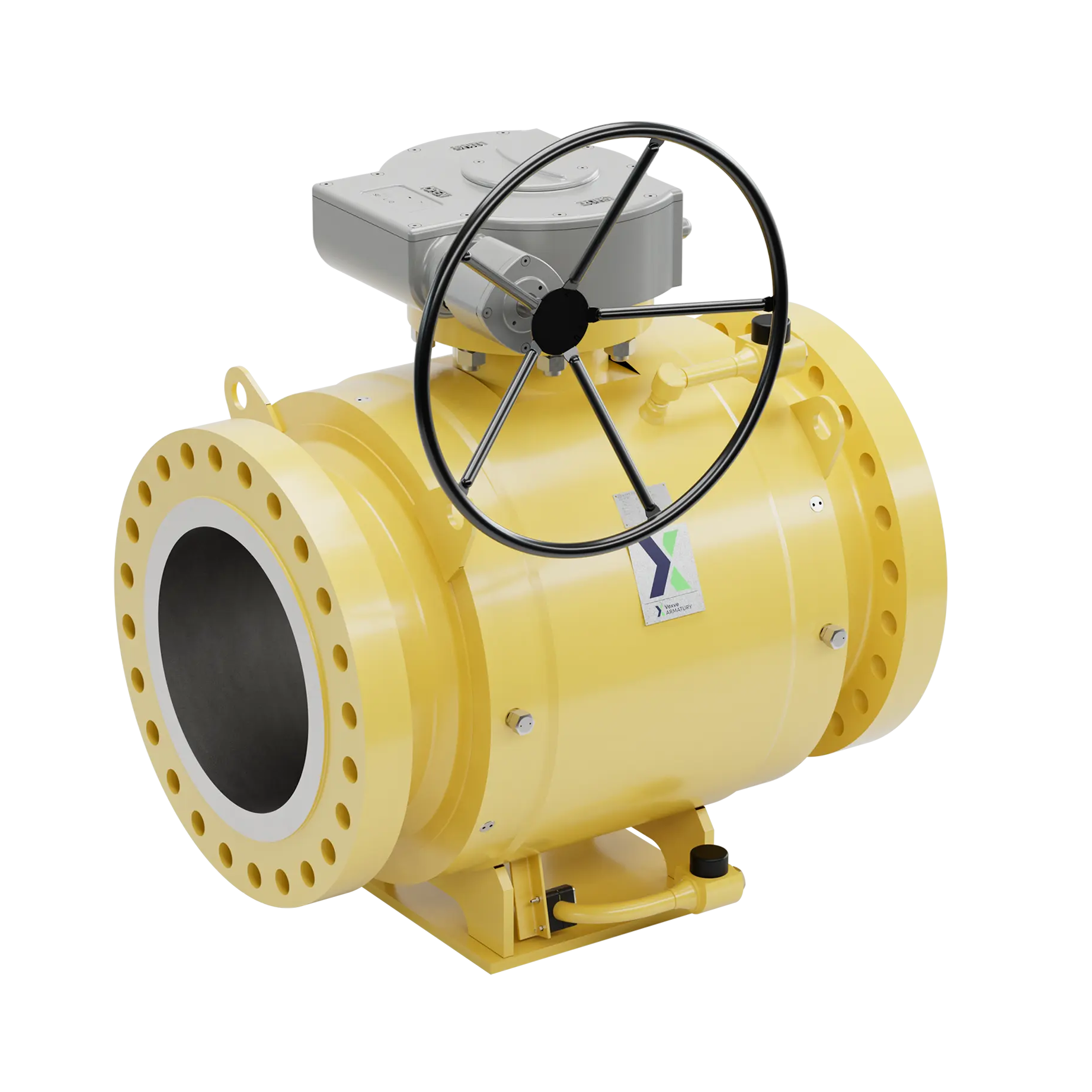
Ball valves are shut-off valves with a rotary, ball-shaped closure, designed for fast and reliable flow shut-off in pressurized pipeline systems. Thanks to their full-bore design and metal or soft sealing, they provide minimal pressure drop, high tightness and safe operation under demanding conditions.
In gas and oil facilities, they serve as the primary shut-off elements for isolating system sections, controlling flow and protecting equipment. Their robust construction, resistance to high pressures and temperatures, and automation options (electric or pneumatic actuator) enable reliable and safe operation under critical industrial conditions.

Applications

Natural gas distribution networks

Oil distribution networks

Oil refineries

Gas compression and metering stations
Basic technical specifications
DN (NPS): DN15 (½”) – DN1400 (56”)
PN (ANSI): PN16 (150) – PN400 (2500)
-46°C to +220°C, under normal conditions
ASTM A350 LF2, ASTM A105N, ASTM A182 Gr. F316, A216 Gr. WCB, A351 Gr. CF8M and equivalent materials
ASTM A182 F316, A351 Gr. CF8M, A350 LF2+ENP and equivalent materials
PTFE, RPTFE, Devlon, A350 LF2+ENP+HNBR+PEEK (PMSS)
fully welded body, two-piece body, three-piece body
above-ground, underground with extended stem
per API 6D, API 598, EN 12266-1
per API 607, BS 6755
standard design
standard design
hand lever, manual gearbox, pneumatic, electric or hydraulic actuator
flanged (ASME B16.5, EN 1092-1), welded (butt weld), threaded
(blow-down, emergency shut-down, etc.)
API 6D, API 608, ASME B16.34, EN 17292
Construction designs
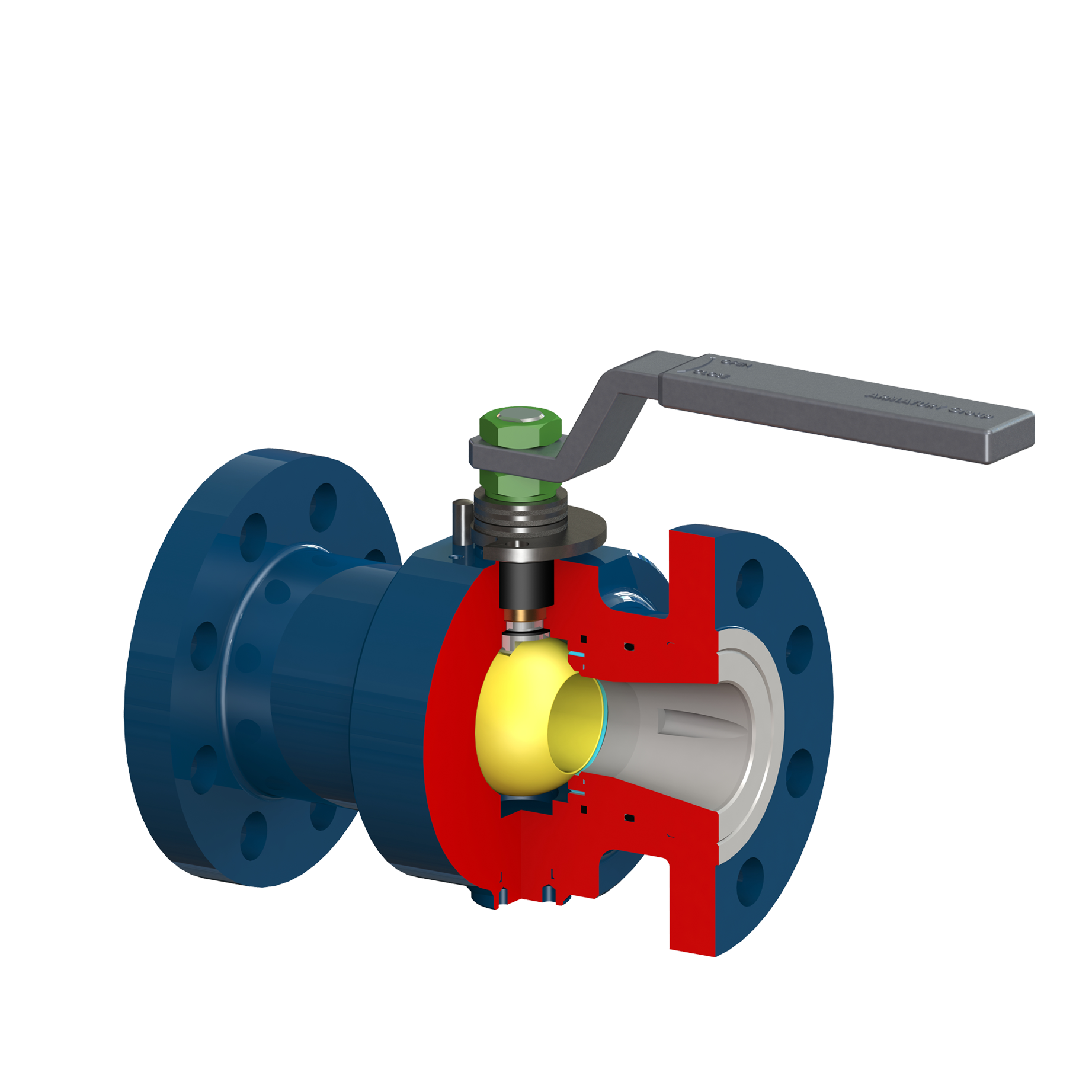
Floating (floating ball)
The ball rests on two sealing seats and, under differential pressure, moves toward the downstream seat, creating additional seating force and reliable tightness. Standard for smaller diameters and lower pressure classes.

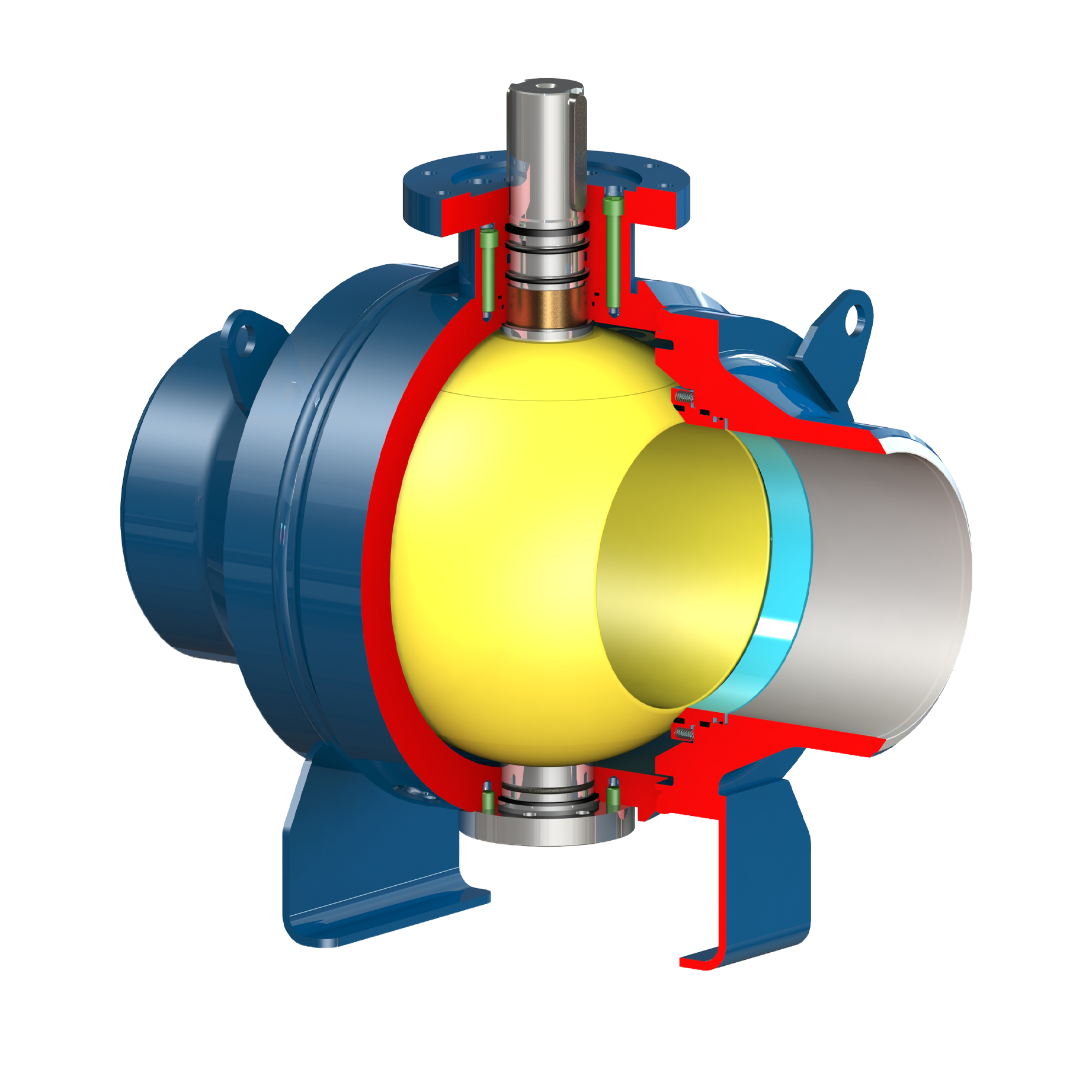

Trunnion (mechanically supported ball)
The ball is mechanically supported in upper and lower bearings, eliminating axial movement under pressure. Sealing is achieved by moving the seats toward the ball. Provides lower torque, more stable operation at high pressures and reliable tightness at large nominal diameters. Standard solution for major oil and gas transmission pipelines.
Full Bore
The internal diameter of the ball bore equals the internal diameter of the pipeline. No pressure drop occurs as fluid passes through — important for long transport pipelines and systems requiring pipeline-cleaning tools (pigging).
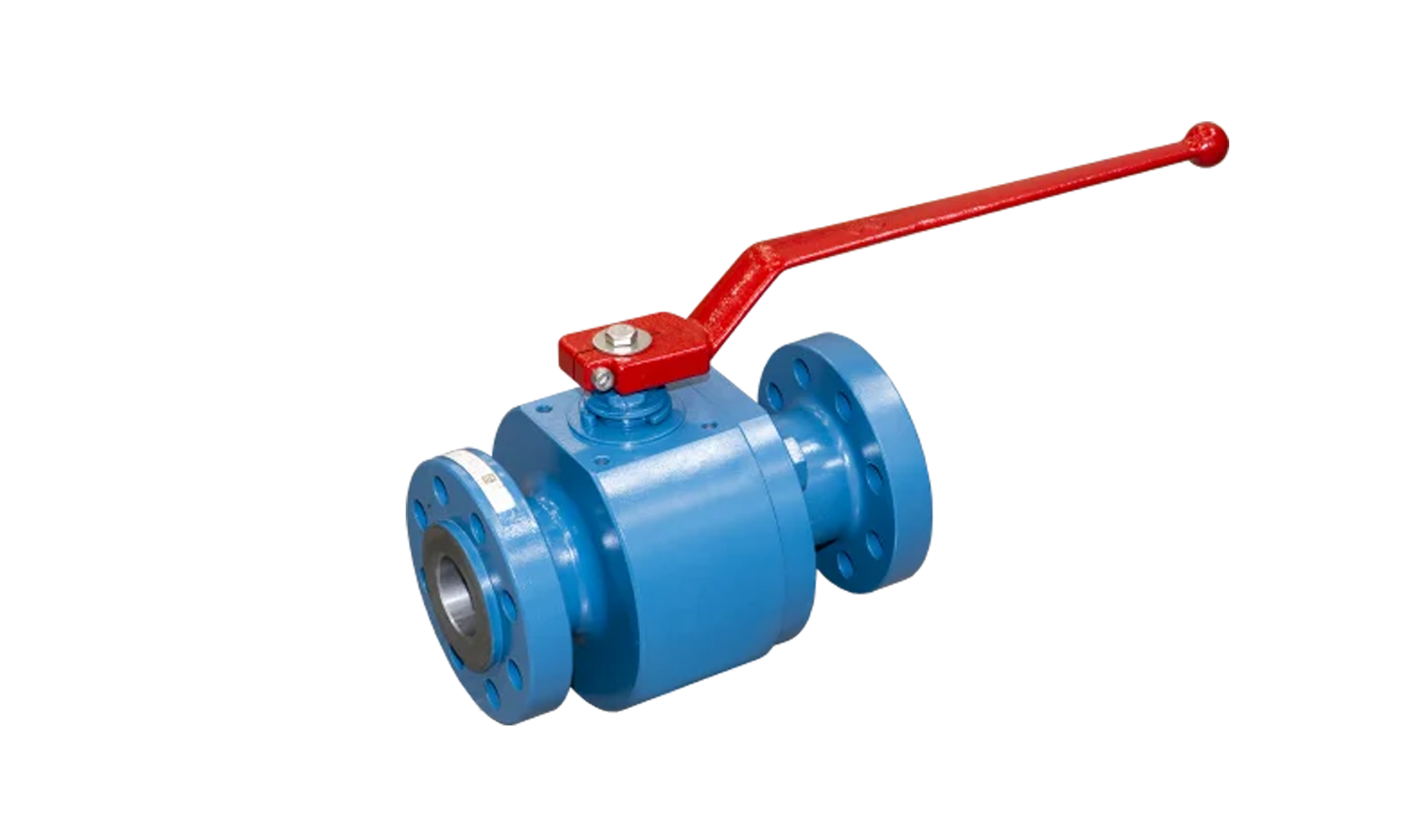

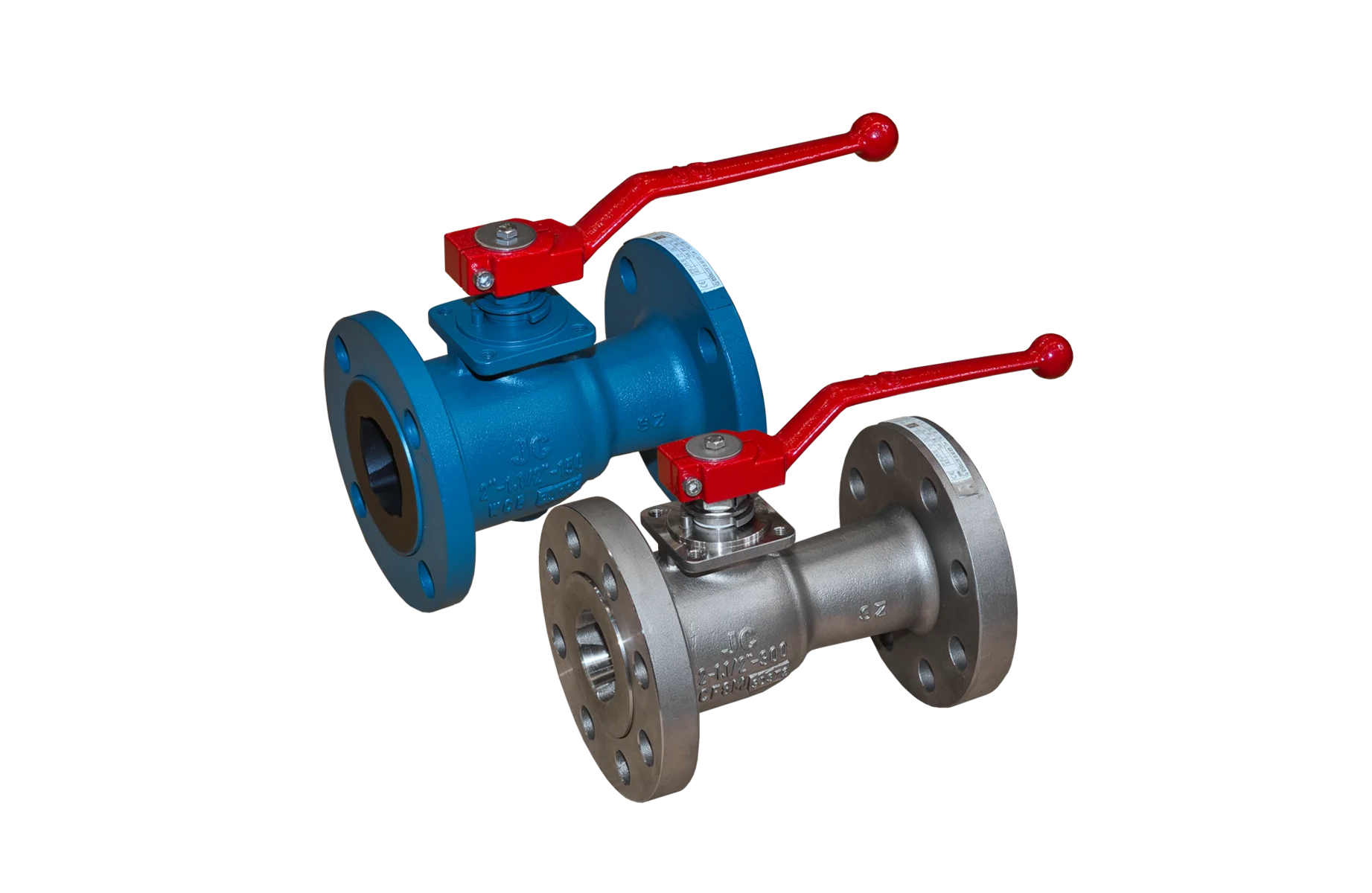

Reduced Bore
The ball bore is smaller than the pipeline's internal diameter. A more compact, economical design suitable where flow restriction isn't critical.
Functional characteristics
Fire-safe design
In the event of fire and damage to soft sealing elements, the metal seat takes over sealing and prevents uncontrolled leakage of flammable media.
DBB – Double Block and Bleed
Provides two-stage isolation of a pipeline section and controlled draining of the cavity between seals, to check tightness or allow safe servicing while the pipeline remains under working pressure.
Blow-out safe stem
A mechanical support inside the body preventing the stem from being ejected under internal pressure, eliminating the risk of losing tightness if the stem seals are damaged.
Anti-static design
An electrically conductive connection between ball, stem and body, preventing static electricity buildup.
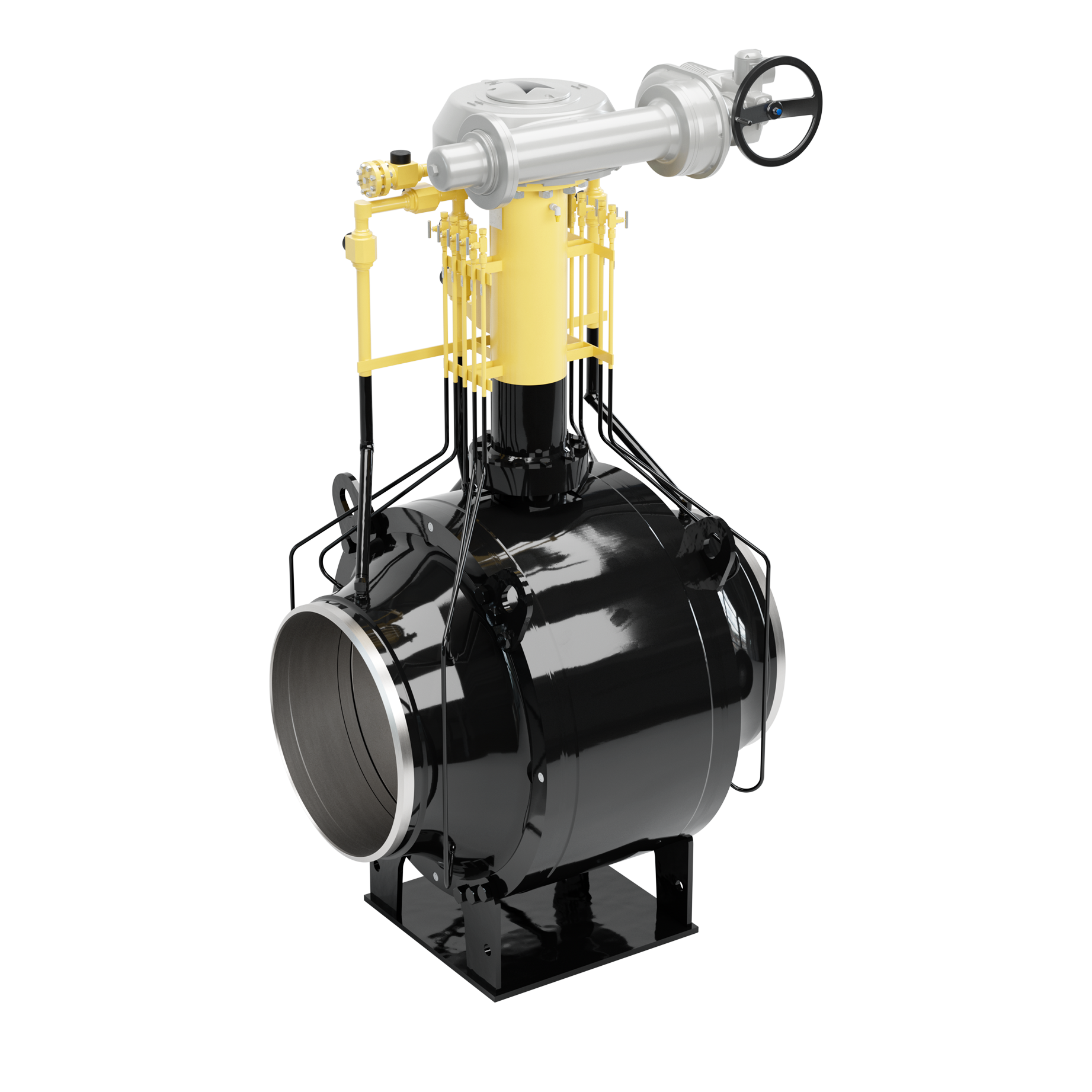

ESDV/BDV function
Valves fitted with fail-safe actuators automatically move to a safe position (fail-closed or fail-open) on power loss or activation of the safety system.
Standards and certification
The valves are manufactured in accordance with relevant European standards for energy and industrial equipment.
Manufacturing and quality control includes the following certificates and standards:
- ISO 9001
- ISO 14001
- PED (2014/68/EU) – module H
- API 6D
- API 608
- API 607 / BS 6755 fire-safe
- API 598
- ASME B16.34
- EN 17292
Valves delivered by manufacturer on previous projects




Project support for the oil and gas sector
The selection of an appropriate ball valve for oil and gas pipelines depends on the pressure class, media temperature, fluid aggressiveness, nominal diameter, required tightness class and project safety requirements.
The expert team at Contex Energy provides technical support to designers, contractors and oil companies in defining the appropriate design, materials and operating method, based on project documentation and system operating parameters.

Contact us for more information

Schedule a free consultation here
Related services
Contex Energy also provides the following services:


Frequently asked questions
For fast and reliable flow shut-off in pressurized pipeline systems — isolating system sections, controlling flow and protecting equipment. Especially important where high tightness, safety and reliable operation are required.
Floating valves have a ball that rests on seats and moves under differential pressure, while trunnion valves have a ball supported in bearings. Trunnion construction is used for larger diameters and higher pressures because it enables more stable operation and lower torque.
A full bore valve has a ball bore the same diameter as the pipeline, allowing unobstructed flow and minimal pressure drop. A reduced bore valve has a smaller bore, making it more compact and economical. The choice depends on whether full flow or a more cost-effective solution matters more.
It lets the valve retain its sealing function even in a fire — when high temperatures damage soft sealing elements, metal parts take over sealing. Particularly important with flammable media such as oil and gas.
Double Block and Bleed allows two-stage isolation of a pipeline and controlled draining of the space between sealing points — used to check tightness and for safer servicing. Important where pressure, flammable media and safety are key.
A design that prevents the stem from being ejected from the body under internal pressure, reducing the risk of losing tightness and media leakage. Especially important for high-pressure systems.
Standards defining construction, testing, tightness and safety — most commonly API 6D, API 608, API 607, API 598, ASME B16.34, EN 17292 and EN 12266-1. The exact standards depend on the project, media, pressure and system requirements.
Materials resistant to corrosion, pressure and temperature — in practice, alloy and stainless steels and other materials matched to the fluid composition. Selection is defined by operating parameters and project documentation.
Yes — with pneumatic, electric or hydraulic actuators, enabling remote control and connection to safety systems. Demanding installations can also have a fail-safe function for automatic movement to a safe position.
District heating valves mostly work with hot water or steam; oil and gas valves work with flammable, hazardous or aggressive media. That's why oil and gas valves have stricter safety requirements and often include fire-safe, DBB, blow-out safe and anti-static designs. Selection always depends on the medium, pressure, temperature and project standards.