
Ball valves for district heating
Product description
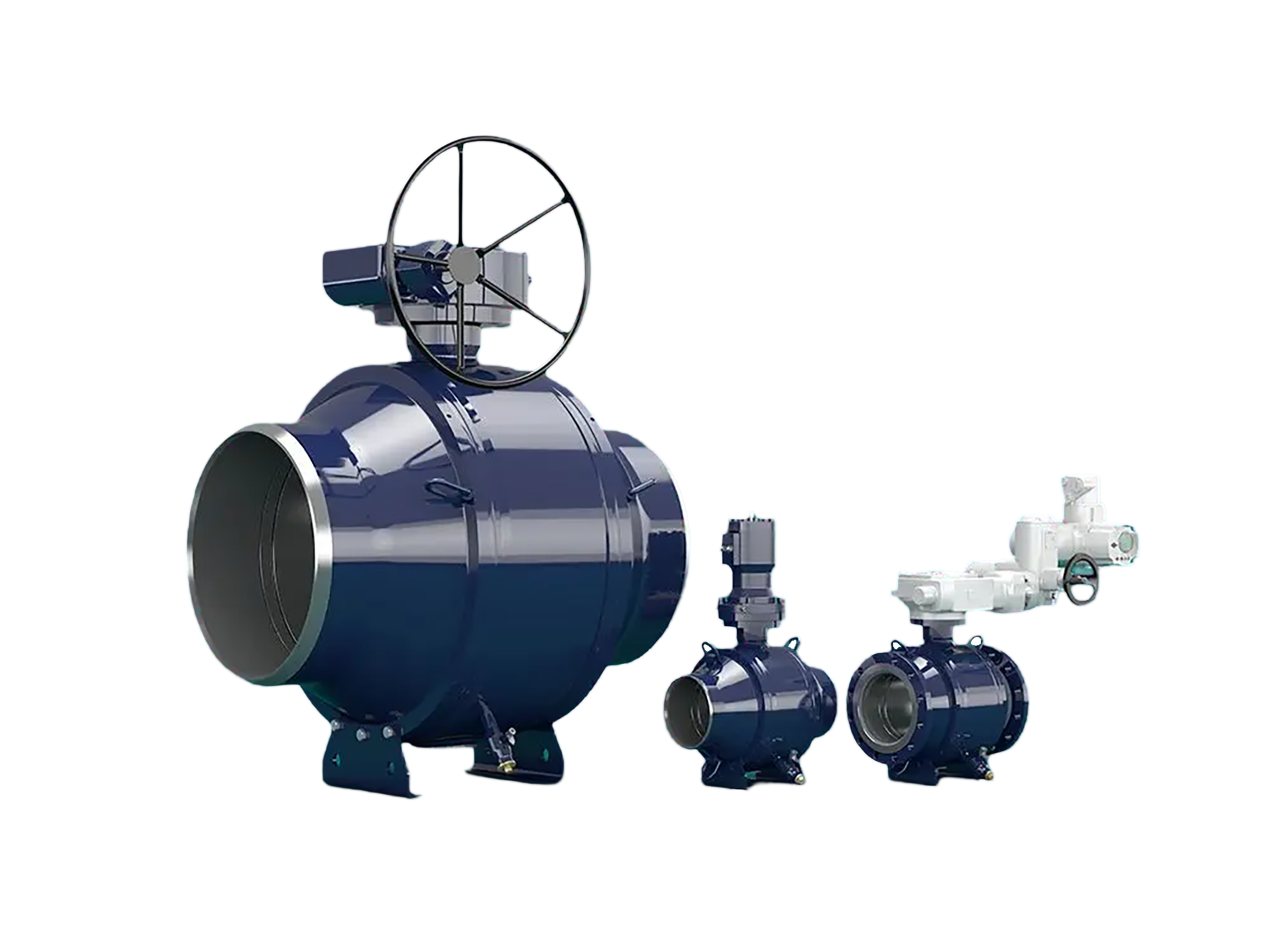
Ball valves for district heating and cooling systems are designed for reliable flow control and shut-off in hot-water and cooling networks. Thanks to their robust construction and resistance to high temperatures and pressures, they are a standard solution in energy plants, heating plants and industrial systems.




Basic technical specifications
DN10 – DN1200
PN16, PN25 and PN40
-20°C to 200°C
P235GH (1.0345), P355NH (1.0565), P355QH (1.0571), P355NL1 (1.0566), and other equivalent materials
X5CrNi18-10 (1.4301), steel + stainless plating, ASTM A350 LF2 +Ni, and other equivalent materials
X17CrNi16-2 (1.4057), X8CrNiS18-9 (1.4305), and other equivalent materials
PTFE+C, and other equivalent materials
FKM, and other equivalent materials
Full bidirectional tightness per EN 12266-1, leakage class A
hand lever, manual gearbox, pneumatic, electric or hydraulic actuator
threaded, flanged or welded ends, in accordance with EN, DIN and GOST standards
full or reduced bore
option for pre-insulated valves for installation on pre-insulated pipelines
oxygen-free process water, cooling water, hot water, superheated water, steam and condensate

Valve body construction design
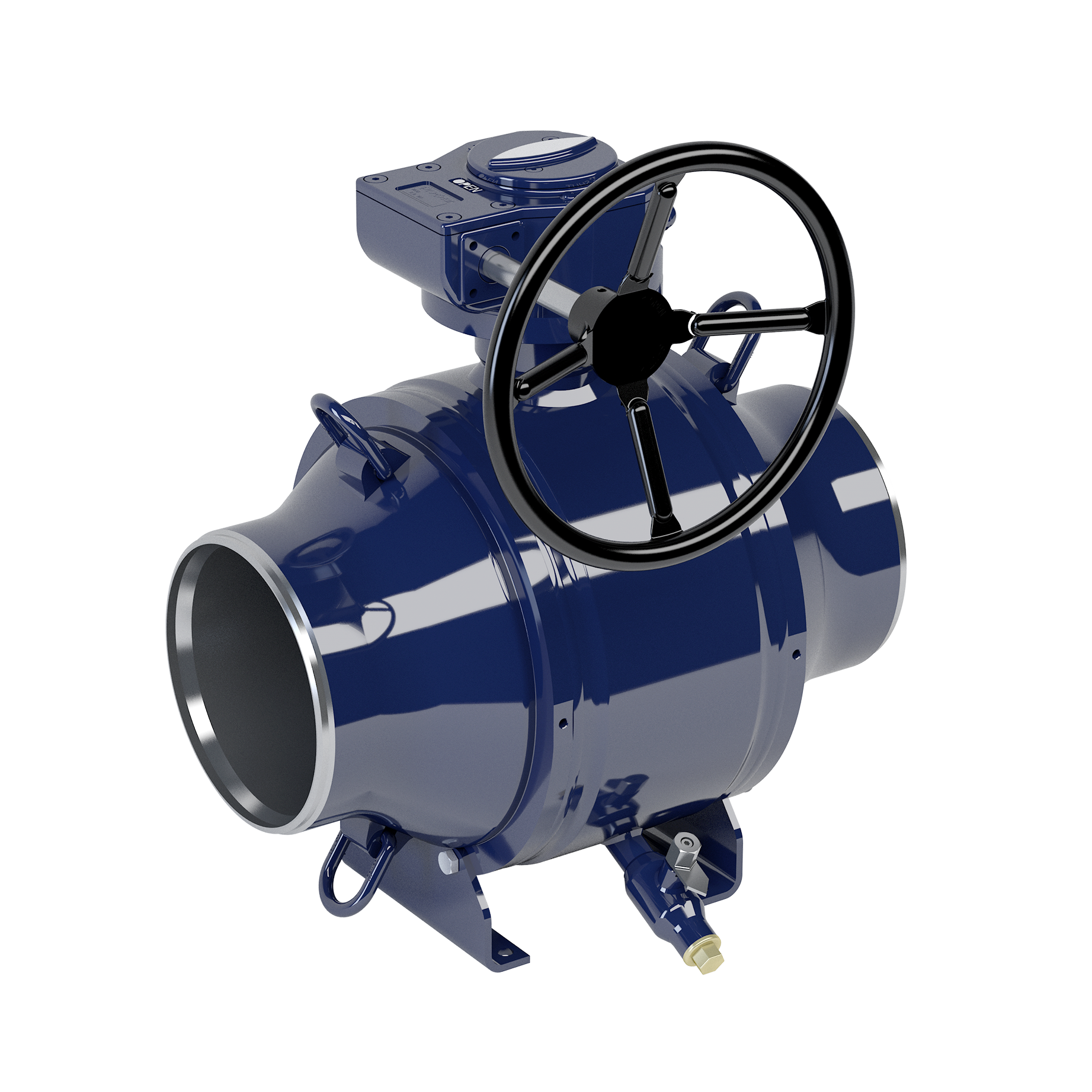
Full welded body
A fully welded body construction provides maximum mechanical strength, lasting tightness and reliable operation in district heating systems up to 200°C, nominal diameters DN10–DN1200 and nominal pressures PN16, PN25 and PN40.
As a construction without bolted joints between the valve body parts, and due to the high-quality materials used, the advantages are:
- lightweight, space-saving design
- "service-free" operation (no need for regular servicing during use)
- long design service life
- higher mechanical strength
- better resistance to temperature cycling
Ball design
"Floating" design
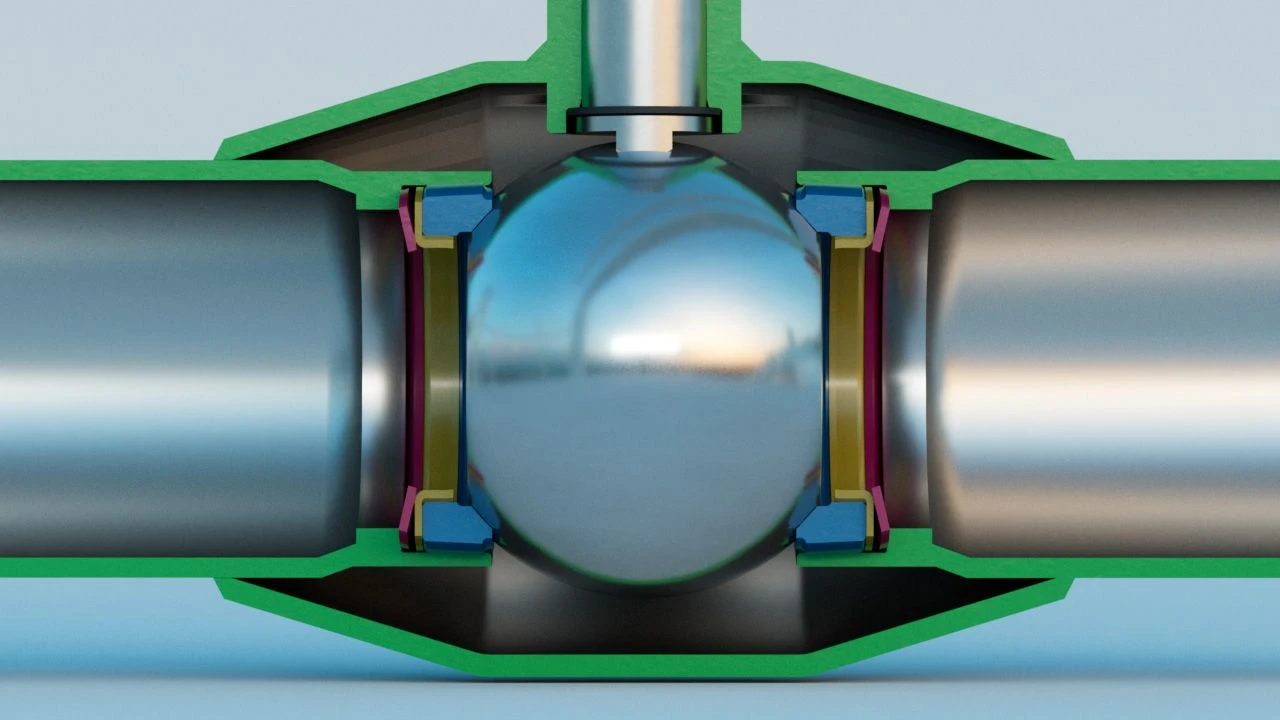
The valve is built in a floating design with a freely supported ball and spring-loaded sealing seats. Under differential pressure, the ball — supported through the upper stem — moves toward the downstream seat, creating additional seating force and reliable tightness.
Spring-preloaded seats ensure tightness even at low pressures, compensate for wear and thermal expansion, and enable safe operation in district heating systems up to 200°C, nominal diameters DN10–DN500 and nominal pressures PN16–PN40.
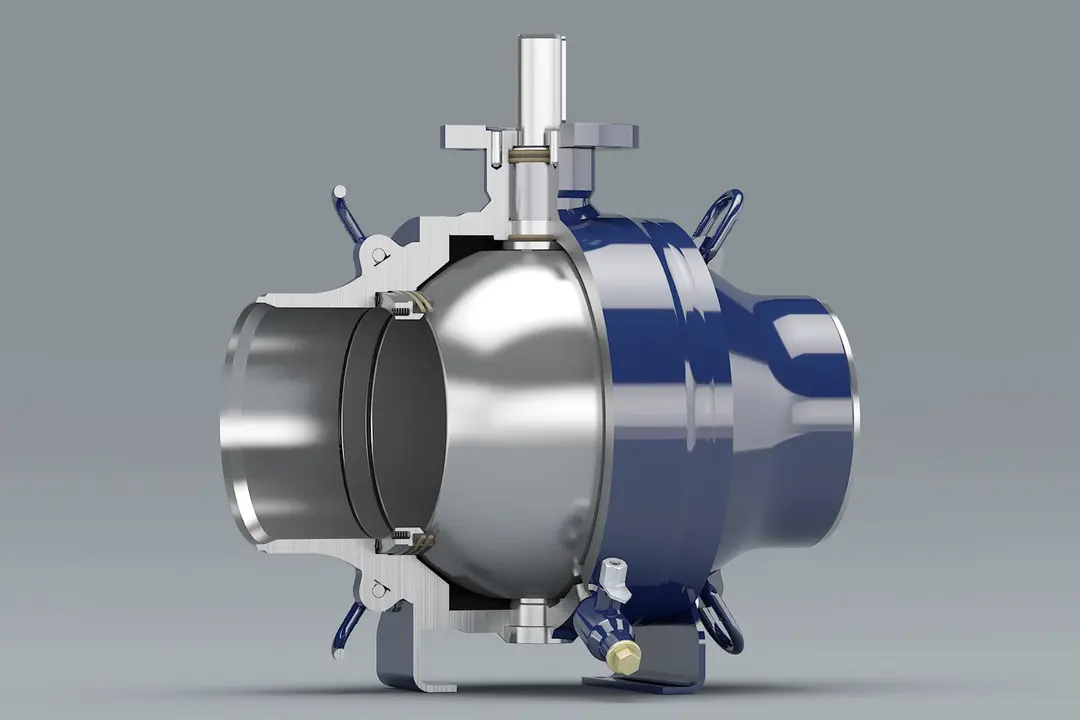
"Trunnion" design
Trunnion-design valves have a ball mechanically supported in upper and lower bearings, eliminating axial ball movement under differential pressure. Sealing is achieved by moving the seats toward the ball, assisted by springs and/or additional media pressure.
This construction provides reduced torque, stable operation at higher pressure classes (PN25, PN40) and reliable tightness at large nominal diameters, making it the optimal solution for main district heating and energy pipelines up to 200°C.
This design is intended for nominal diameters DN125–DN1200.
Key advantages:
- Stable sealing at high pressures
- Lower torque
- Resistance to dynamic loads
- Reliability at large diameters
Functional characteristics
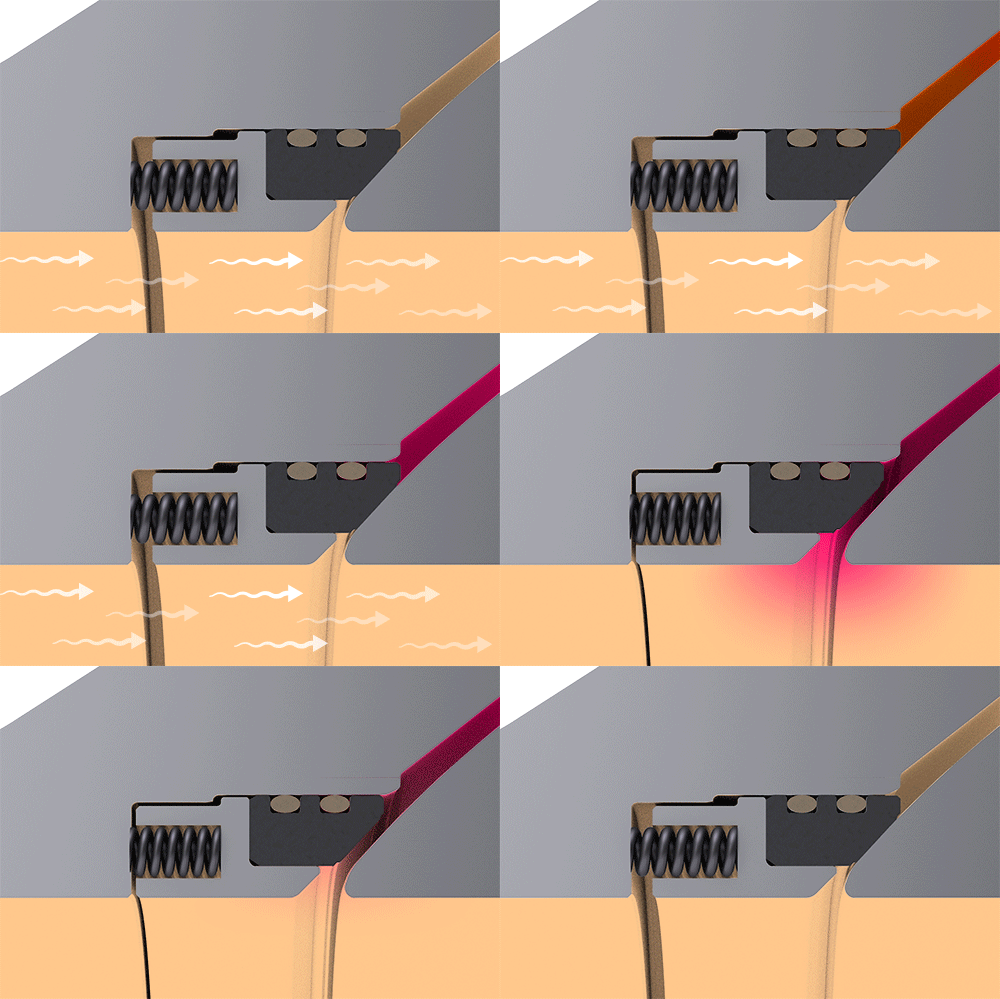
Single Piston Effect
The sealing seats feature a Single Piston Effect (SPE), which controllably moves the valve seat, allowing automatic relief of increased pressure from the body cavity toward the pipeline.
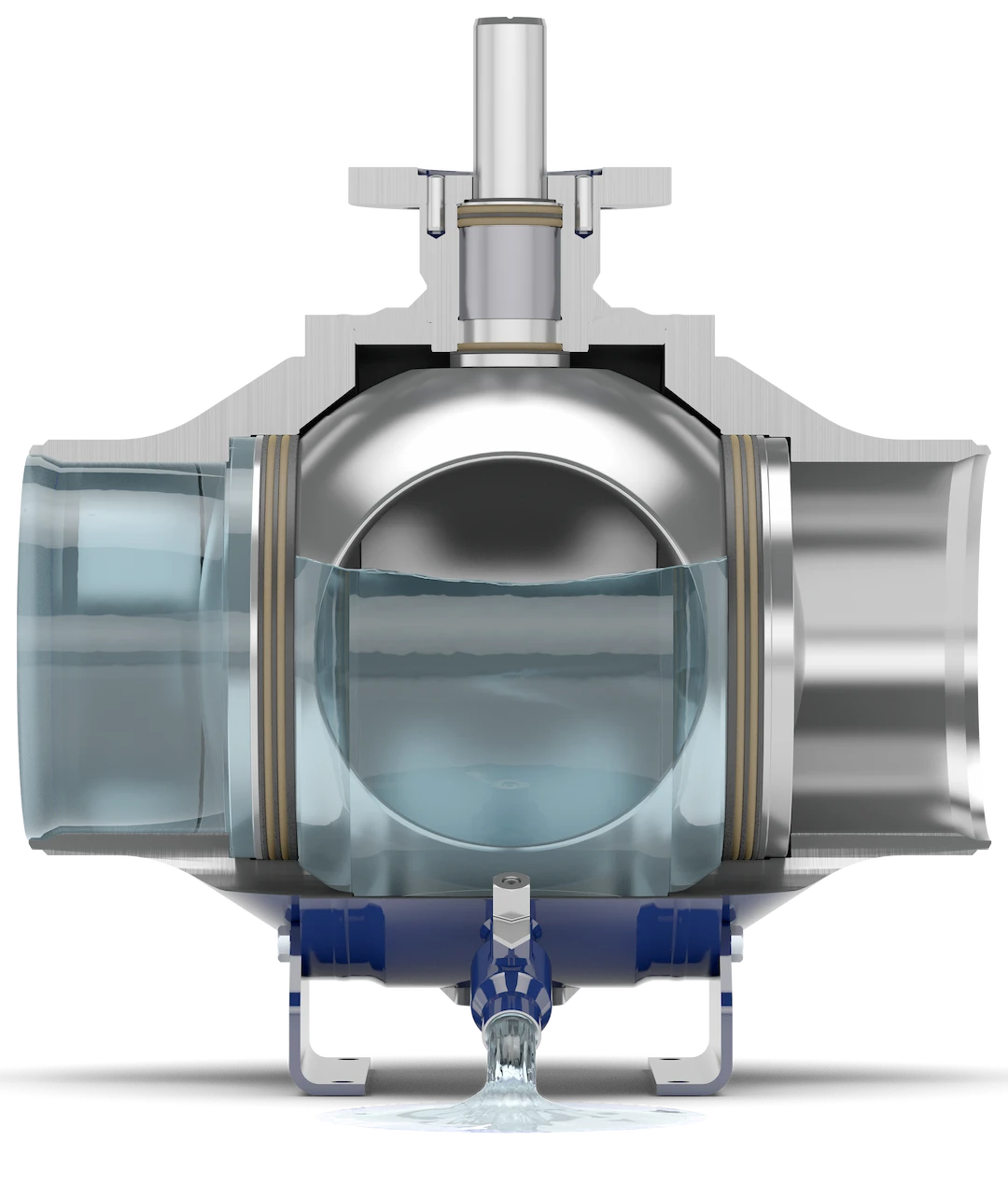
Double Block and Bleed
The Double Block and Bleed (DBB) function enables controlled draining (relief) of the valve body cavity through a drain connection, to check tightness even while the pipeline is under working pressure.
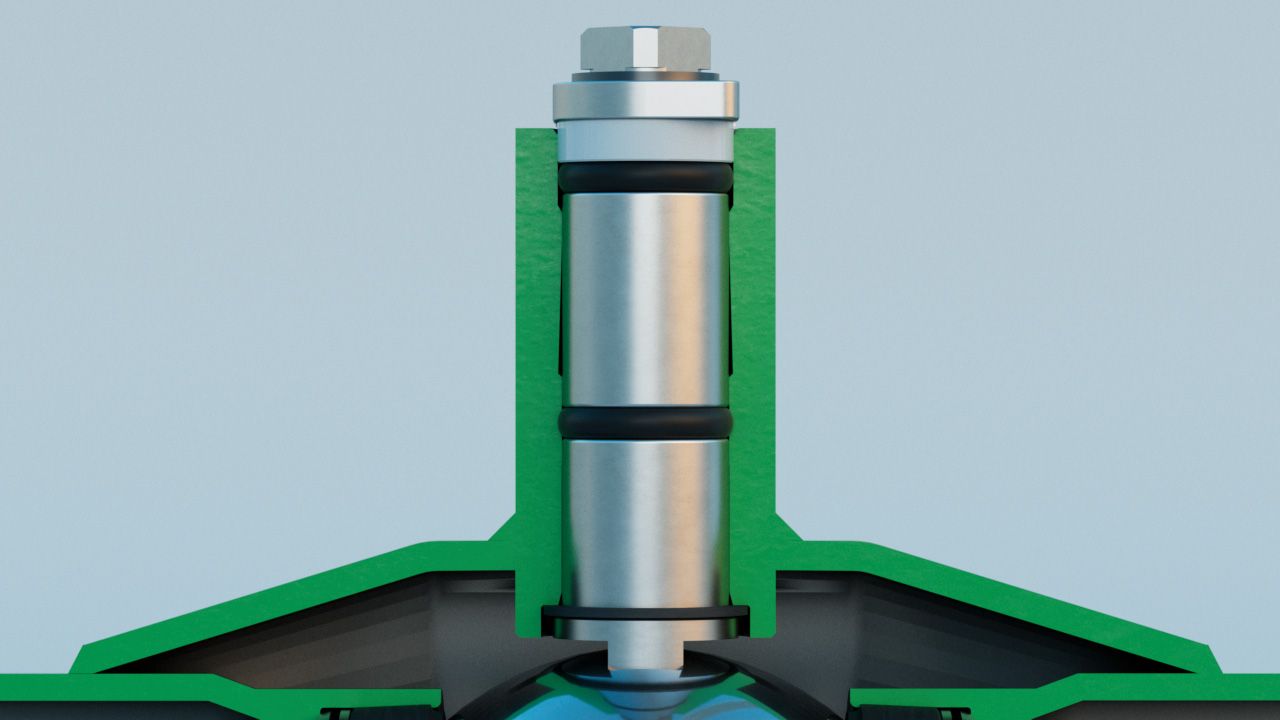
Blow-out safe stem
The stem is built in a blow-out-safe design, with internal mechanical support preventing it from being ejected under internal pressure. If the stem sealing elements are damaged, this design eliminates the risk of the stem being blown out under pressure.
Standards and certification
The valves are manufactured in accordance with relevant European standards for energy and industrial equipment.
Manufacturing and quality control includes the following certificates and standards:
- ISO 9001
- ISO 14001
- PED (2014/68/EU) – module H
- EN 488
- Euroheat & Power – EHP003
- TÜV Rheinland – AGFW
- Certificate of conformity – 3A
- EPD
Valves delivered by manufacturer on previous projects

Project support for the oil and gas sector
The selection of an appropriate ball valve for district heating systems depends on several factors, including working pressure, media temperature, pipeline nominal diameter and the valve operating method.
The expert team at Contex Energy supports designers, contractors and energy companies in selecting the optimal solution for specific systems.
Based on the project documentation and technical requirements, it is possible to define the appropriate valve type, construction design, materials and operating method.

Contact us for more information

Schedule a free consultation here
Related services
Contex Energy also provides the following services:


Frequently asked questions
Ball valves are used to reliably shut off and control the flow of the working medium in hot-water and cooling networks. Their design allows fast, complete flow shut-off with minimal hydraulic resistance.
Floating valves have a ball that rests on seats and moves under differential pressure, while trunnion valves have a ball supported in bearings. Trunnion construction is used for larger diameters and higher pressures because it enables more stable operation and lower torque.
Industrial ball valves for hot-water systems are available in a wide range of sizes, most commonly from DN10 to DN1200, depending on the valve's construction and purpose.
Ball valves for district heating are most often designed for nominal pressure PN16, PN25 or PN40, depending on the system's operating parameters.
Depending on the materials and sealing elements, ball valves for hot-water systems can operate at approximately -20°C to 200°C.
The valves are intended for water, superheated water, water-glycol mixtures and other non-aggressive fluids used in hot-water systems.
Yes. Valves with a fully welded body are often used underground and can be integrated into pre-insulated district heating pipelines.
Ball valves can have flanged, welded (butt weld) or threaded connections, in accordance with EN, DIN or GOST standards.
Yes. Valves can be fitted with manual gearboxes or automated using pneumatic, electric or hydraulic actuators.
It allows isolation of a pipeline section and controlled draining of the valve cavity to check tightness or allow safe system maintenance.
It allows automatic relief of excess pressure from the valve body cavity toward the pipeline, preventing excessive internal pressure buildup.
It means the stem has mechanical support inside the valve body that prevents it from being ejected under pressure, increasing operating safety.
Depending on operating conditions, steels such as P235GH, P355NH or P355NL1 are used, while stainless steels and high-resistance alloys are often used for the ball and stem.
Valves with a fully welded body are designed for a long service life with minimal maintenance requirements.
The choice depends on working pressure, media temperature, pipeline nominal diameter, operating method and valve construction. Consultation with a technical team is recommended to define the optimal solution for a specific project.