
Check valves
Product description
Check valves are a key element of industrial valves, whose main function is to allow fluid flow in one direction while preventing backflow. Their operation is based on differential pressure — under normal flow, the shut-off element (disc/flap) opens, while it closes automatically when pressure drops or backflow occurs, protecting the installation, equipment and process.
In district heating, natural gas and energy plant systems, check valves are used to prevent fluid backflow and ensure one-directional flow, protecting key system components such as circulation pumps in heating networks, compressors in gas installations, and turbines, pumps and auxiliary equipment in energy plants — preventing reverse flow, water hammer and the mixing of different flows, while maintaining a stable operating regime and the safety of the entire system.
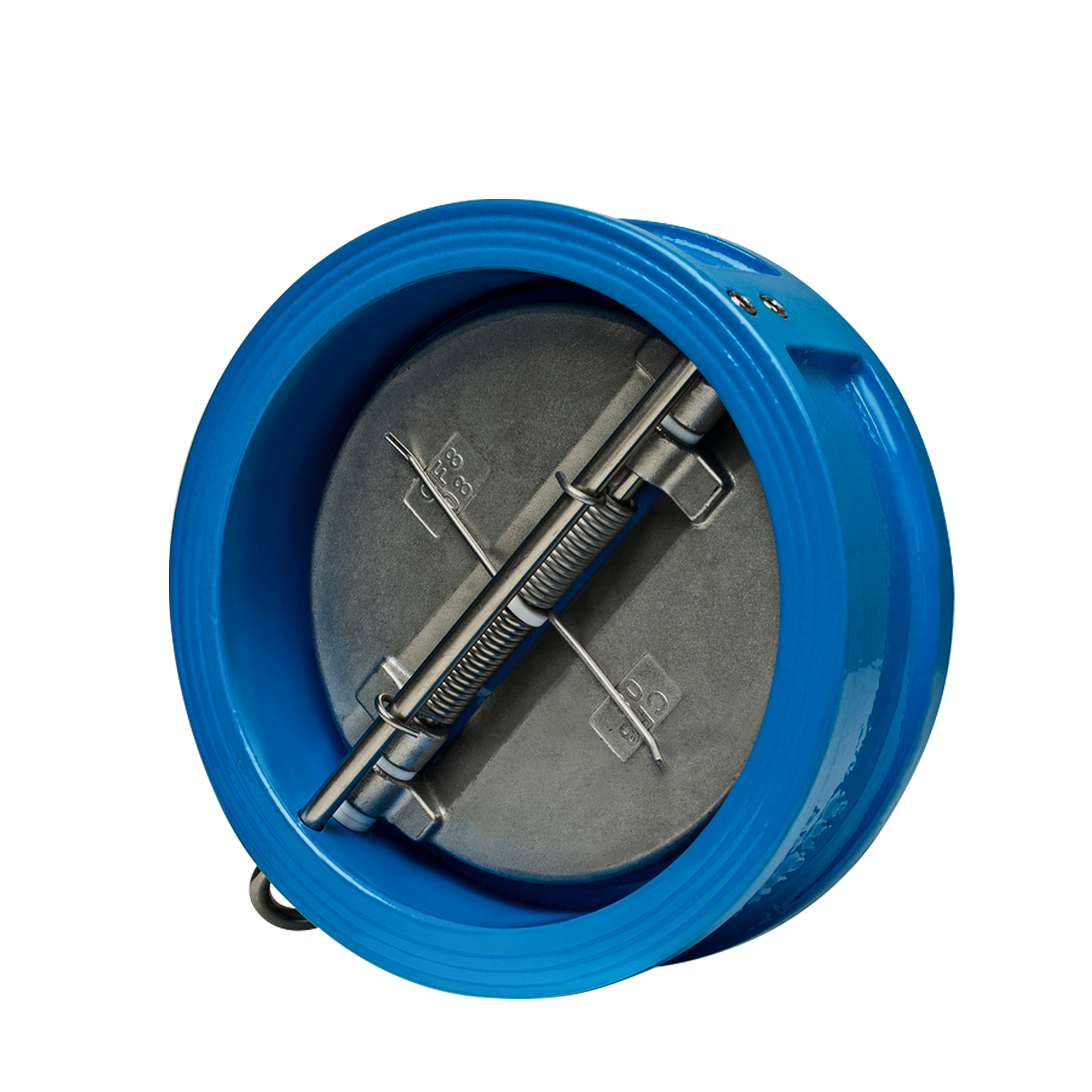


Basic technical specifications
DN15 – DN1400
PN16 – PN160
up to 600°C
EN-GJS-400-15, GP240GH (1.0619), P250GH (1.0460) and equivalent materials
EN-GJS-400-15, WCB A-216, GP240GH (1.0619), P250GH (1.0460), GX5CrNiMo19-11-2 (1.4408), X5CrNi18-10 (1.4301) and equivalent materials
soft sealing (EPDM, up to 150°C), metal sealing (up to 200°C and above)
EN 12266-1
flanged (EN 1092-1, EN 1092-2), welded ends (butt weld), wafer (between flanges)
EN 16767, API 594
Construction designs
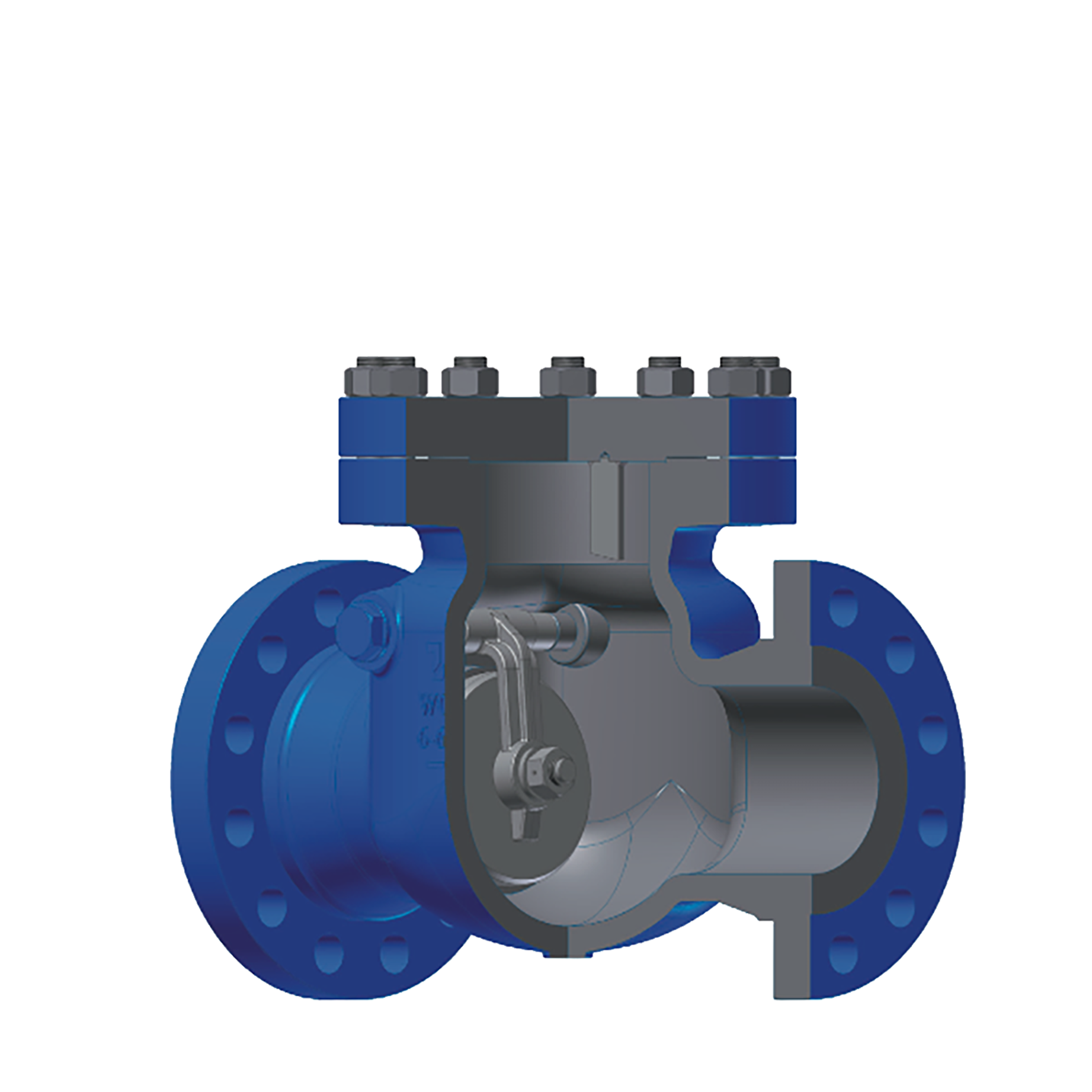
Swing Check Valve Design
A design in which the disc is mounted on a hinge and swings freely around an axis. Under normal flow conditions, the disc opens due to differential pressure, while under reverse flow conditions, it closes by gravity and the pressure of the reverse flow. This design is suitable for applications requiring low pressure drop and stable flow, such as water supply networks and district heating systems.

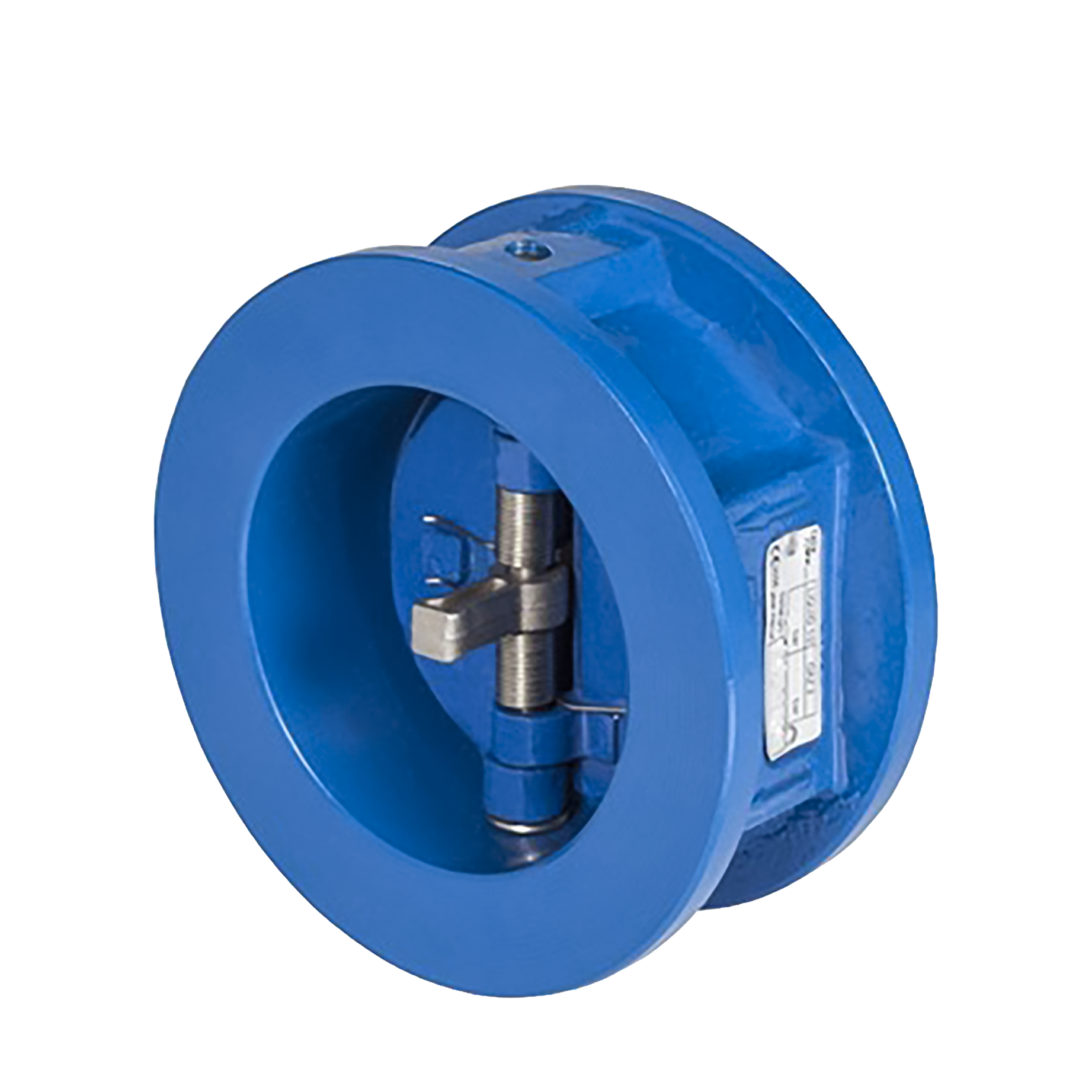
Dual-Plate (Wafer) Check Valve Design
Uses two plates mounted on a central shaft and spring-loaded to the closed position. The plates open under flow pressure with low pressure drop and close rapidly under spring action when reverse flow occurs, providing compact dimensions, fast response and effective protection against backflow in pumping, compressor and energy systems.
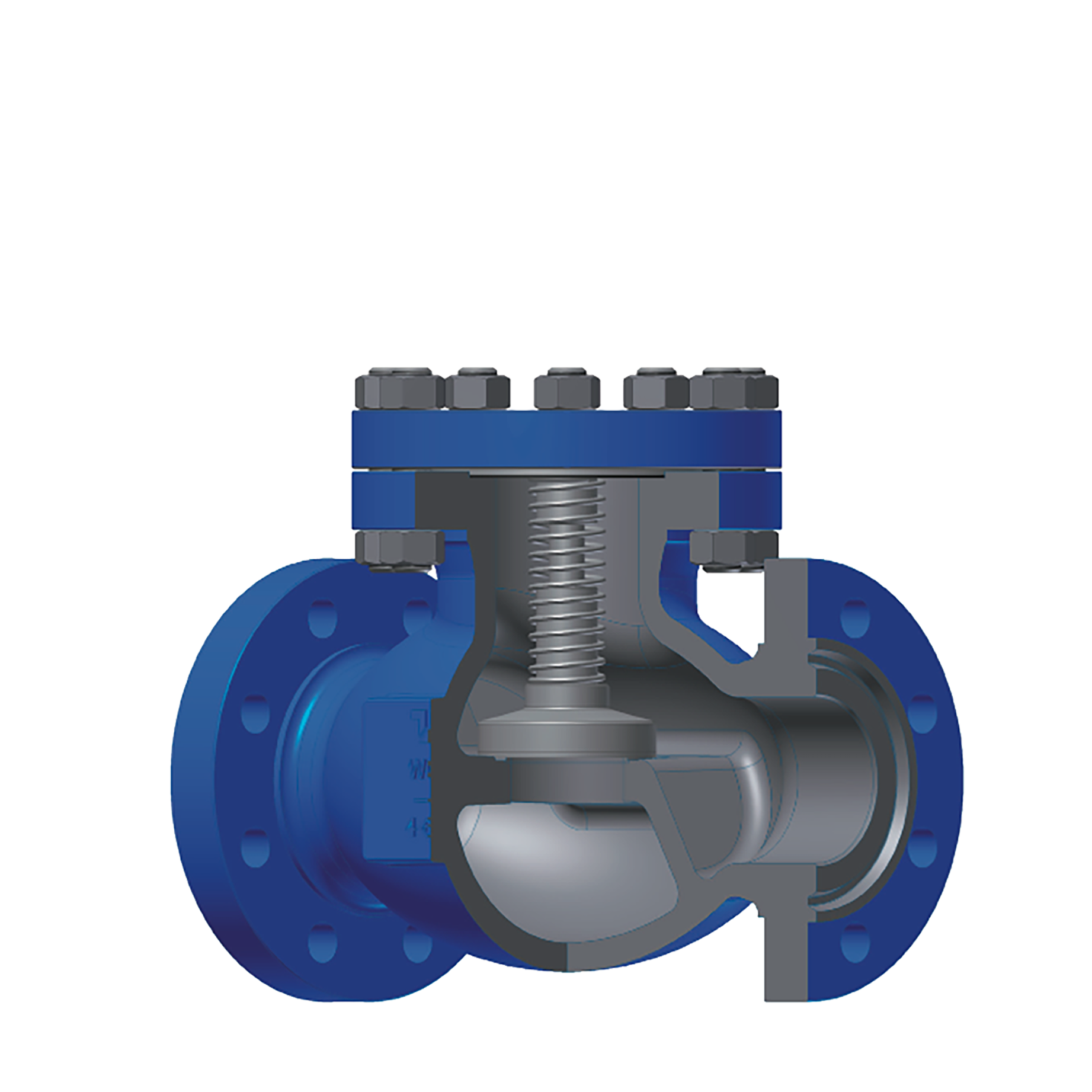
Lift-Check Valve Design
Based on the linear movement of a disc that lifts off the seat under flow pressure, guided vertically inside the valve body, and returns to the seat by gravity and upstream pressure when flow stops or reverses. This design provides reliable sealing and stable operation in systems with higher pressures and relatively stable flow conditions.

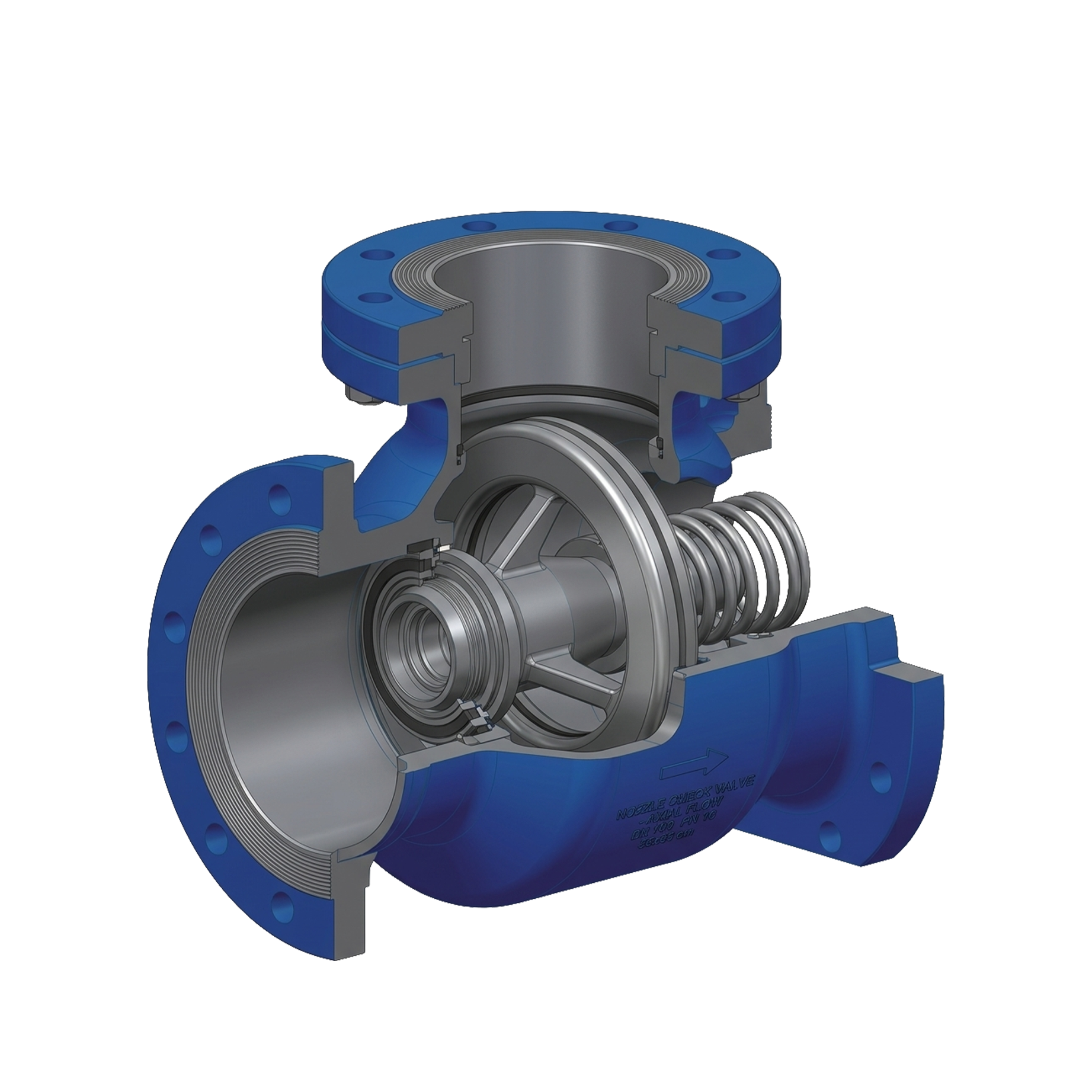
Nozzle Check Valve
A specialized check valve design in which the disc is guided axially within a precision-machined nozzle with minimal clearance. Under normal flow conditions, the disc opens linearly with very low pressure drop, while under reverse flow conditions, it closes rapidly under the combined action of reverse flow pressure and the spring, providing effective protection against backflow and water hammer. This design is particularly suitable for highly dynamic systems such as turbines, compressor stations and high-load energy process systems.

Standards and certification
The valves are manufactured in accordance with relevant European standards for energy and industrial equipment.
Manufacturing and quality control includes the following certificates and standards:
- EN 16767
- EN 12266-1
- PED 2014/68/EU
- API 594
- ISO 9001/14001
Manufacturers delivered on previous projects



Project support
The selection of an appropriate check valve depends on the nominal diameter, operating pressure, medium temperature, installation orientation and the system's dynamic characteristics — particularly the risk of water hammer following sudden pump shutdown.
The Contex Energy engineering team provides technical support to designers, contractors and energy companies in selecting the optimal valve design for specific hot-water systems.

Contact us for more information

Schedule a free consultation here
Related services
Contex Energy also provides the following services:


Frequently asked questions
Check valves allow fluid flow in only one direction and prevent backflow. In district heating systems, they protect circulation pumps, pipelines and other equipment from reverse flow. This contributes to stable and safe operation of the heating network.
When a pump stops, reverse flow can occur through the pipeline. This can strain the pump, cause instability in the system, and increase the risk of equipment damage. A check valve automatically shuts off flow in the opposite direction, protecting the installation.
Water hammer is a sudden pressure change in a pipeline caused by a sudden change in flow speed or direction. It can occur when a pump stops suddenly or flow shuts off quickly. A properly selected check valve reacts quickly to backflow and reduces the risk of water hammer.
Check valves are supplied in various nominal diameters and pressure classes, according to project requirements. Based on the technical characteristics listed, they are available in the range DN15–DN1400 and PN16–PN160. The exact choice depends on the medium, temperature, pressure and installation conditions.
Check valves generally don't require special operation or an actuator. Their operation is based on differential pressure — they open automatically under normal flow and close under reverse flow. This makes them an automatic safeguard for the pipeline system.
Check valves can have flanged connections, welded ends, or a wafer (between-flange) design. The choice of connection depends on the pipeline design, installation space and the project's technical requirements. Connections are selected in accordance with relevant standards and project documentation.